Staff Publications
Divergent Paths in the South Caucasus
By Laura Linderman
When President Donald Trump welcomed Armenian Prime Minister Nikol Pashinyan and Azerbaijani President Ilham Aliyev to the White House in August 2025, the ceremony celebrated more than just the hope that decades of conflict between the two neighboring states might finally be coming to an end. The agreement initialed that day, which grants the United States long‑term development rights to a transit corridor ambitiously named the Trump Route for International Peace and Prosperity (TRIPP), marked a watershed moment in the geopolitics of the South Caucasus. For the first time in modern history, a major peace process in the region had bypassed Moscow entirely in favor of Western mediation.
Yet the TRIPP agreement’s deeper significance lies not in American diplomatic triumph, but in what it reveals about a regional transformation—and the limits of that transformation. Russia’s war in Ukraine has created a window of opportunity for the South Caucasus, a moment when Moscow’s strategic distraction has given regional states unprecedented room to maneuver. The question is not whether this window exists, it clearly does, but how long it will remain open, and which states have the capacity to exploit it before it closes.
The answers vary dramatically. The South Caucasus has moved from what Zbigniew Brzezinski famously called the “grand chessboard,” where great powers moved regional states as pawns, to what Svante E. Cornell and Damjan Krnjević Mišković describe in the introduction to their edited volume, titled After Karabakh: War, Peace, and the forging of a New Caucasus (2025), as a “card table,” where each state holds its own sovereign hand of playing cards.
But not all hands are equal. Azerbaijan sits at the card table with a strong hand, leveraging energy resources, geographic indispensability, and military victory to extract value from multiple powers simultaneously. Armenia plays a weak hand the best it can under the circumstances, having initiated much of the TRIPP process to escape isolation and avoid being further diminished by Azerbaijan; a survival strategy, but a strategy nonetheless. And one could say that it looks as if Georgia has lit its best cards on fire or eaten them, with its government seemingly choosing preservation over strategic opportunity.
The scene at the metaphorical card table after the most recent hand has been dealt is not, as some Western commentators have assumed, a straightforward regional pivot away from Russia toward the West. Nor is it the emergence of a coherent new form of sovereignty. It is something messier: three states responding to the same geopolitical shock with radically different resources, constraints, and choices. The West has increasingly set aside the post‑Cold War vision of liberal internationalism, with its emphasis on open markets, multilateral institutions, and shared sovereignty, in favor of a more transactional approach to statecraft. States the world over, including Armenia, Azerbaijan, and Georgia, are adapting to this reality, but adaptation looks very different depending on whether you’re negotiating from strength or desperation.
The End of the Near Abroad
Russia’s war in Ukraine has accelerated a transformation that was already underway. As Thomas de Waal of Carnegie Europe has argued, “Putin’s war on Ukraine marks the end of the near abroad —the idea that Russia enjoys a special status with its post‑Soviet neighbors.” The mechanisms through which Moscow maintained regional dominance for three decades; frozen conflicts, military bases, the Collective Security Treaty Organization (CSTO), the Eurasian Economic Union (EAEU), energy dependence, and information warfare, have all eroded, some dramatically. De Waal identifies several components of this transformation: ‘sovereignty reasserted’ describes how national elites beyond Russia’s borders are reclaiming independence, while ‘situational strategy’ characterizes Russia’s shift from integration projects to ad hoc policymaking. Moscow, he notes, now has “fewer instruments of soft power and capacity to fight an information war as Russian‑language media is less influential.”
The collapse of Russian security guarantees proved most consequential. When Azerbaijan went into and held Armenian sovereign territory in 2022, Armenia invoked Article 4 of the CSTO collective defense treaty. Russia explicitly rejected intervention, with officials declaring that the organization’s mutual defense provisions did not apply, arguing in part that the border with Azerbaijan had not been delineated. This was not an isolated incident but part of a pattern: Russia had not intervened militarily on the side of Armenia in the Second Karabakh War, arguing (correctly) that Armenian sovereign territory was not under attack, and influenced by (at the time) warming ties with Baku, displeasure with Armenia’s pro‑Western government led by Prime Minister Nikol Pashinyan, and reliance on Türkiye as an economic sanctions lifeline. Moscow subsequently stood aside during Baku’s September 2023 “anti‑terror operation” that ended the conflict over Karabakh entirely. Months later. Russia withdrew its peacekeeping force, a striking reversal for a power that has typically treated military deployments in the former Soviet space as permanent facts on the ground.
The data on Armenian public opinion tells a stark story of this betrayal’s impact. According to International Republican Institute polling, positive views of Russia among Armenians dropped from 93 percent in 2019 to 31 percent in 2024. The Middle East Institute has documented a comprehensive “de‑Russification” of Armenian defense procurement, with Russia’s share of Armenian arms purchases falling from 96 percent in 2021 to less than 10 percent in 2024. Trust in the Russian‑led Eurasian Economic Union has collapsed to just 38 percent, while confidence in the European Union has risen to 62 percent. Even more tellingly, 75 percent of Armenians now believe the European Union should play a greater role in strengthening Armenia’s defense.
Yet it would be a mistake to interpret these shifts as a permanent transformation. The region’s states have learned a hard lesson: that distant security guarantees from any external power is no substitute for the careful balancing that preserves genuine autonomy. De Waal himself warns that Russia may return to more assertive South Caucasus engagement once the Ukraine conflict stabilizes. The period in which the three South Caucasus states have been able to conduct foreign policy more independently of Moscow could prove temporary rather than permanent. The Chatham House analyst Laurence Broers has introduced the concept of “managed decline” to describe the withdrawal of Russian peacekeepers from Karabakh, a deliberate repositioning rather than involuntary retreat. If Broers is right, what looks like Russian weakness may be Russian choice; and choices can be reversed.
Yet a weakened Russia may also be a more dangerous one. As my AFPC and CACI colleague Mamuka Tsereteli has argued, the war in Ukraine has produced a paradox for American strategy: it has significantly reduced Russia’s long‑term strategic power while hardening Moscow into a more risk‑tolerant adversary. Russia’s losses are structural, encompassing demographics, energy leverage, and regional influence, but the challenge for Western policymakers is to lock in these setbacks while managing escalation risks in Moscow’s neighborhood. Armenia’s June 2026 parliamentary elections represent a particular pressure point, where Russia retains significant leverage through its military bases in the country, control of strategic infrastructure, and soft‑power tools.
This uncertainty shapes everything that follows. Regional states are not building a new permanent order; they are maneuvering within a window whose duration is unknown. The critical question is which states have the capacity to lock in gains before that window closes.
Azerbaijan: Exploiting the Window from Strength
Azerbaijan exemplifies what strategic maneuvering looks like when executed from a position of strength. Having won the territorial conflict over Karabakh on its own terms, with crucial Turkish support but without direct Russian military intervention on the side of its adversary, Baku no longer needs to worry about Moscow using the territorial dispute as leverage. President Ilham Aliyev can now engage Washington, Moscow, Ankara, Tehran, and Beijing simultaneously, extracting value from each relationship without becoming any power’s client. Cornell notes: “Azerbaijan has embarked on a foreign policy that seeks to maintain functioning relations with all neighbors and avoid making itself dependent on any particular power for its security.”
The structural foundations of Azerbaijan’s confident posture are substantial. The country supplies approximately 5 percent of the EU’s oil and 6 percent of its gas, giving it leverage that limits EU pressure on governance issues. The Southern Gas Corridor, linking Azerbaijan’s Shah Deniz field with European markets, has elevated Baku’s importance to the European Union at precisely the moment when it began desperately seeking alternatives to Russian energy. The 2021 Shusha Declaration formalized Azerbaijan’s strategic alliance with Türkiye, providing security guarantees that substitute for the need for any Russian or Western commitment. This partnership has grown significantly in the energy and defense sectors, with Turkish Bayraktar drones playing a decisive role in Azerbaijan’s military victory in the 2020 Second Karabakh War.
Most recently, U.S. Vice President JD Vance’s February 2026 visit to Baku resulted in a Charter on Strategic Partnership between Azerbaijan and the United States, formalizing cooperation across energy, connectivity, artificial intelligence, and security. The document represents the highest level of bilateral cooperation in the history of the bilateral relationship, signaling Washington’s recognition of Azerbaijan as a strategic hub rather than merely an energy supplier, a shift that reflects the Trump Administration’s transactional approach to regional engagement.
Azerbaijan’s geographic position amplifies these advantages. As Krnjević has argued, Azerbaijan functions as a “keystone state;” one with “sufficient force and authority to stand on its own,” serving as an “interlocutor, […] intermediary, and critical mediator” between major powers. The country straddles both ends of TRIPP and sits where the Middle Corridor “seamlessly blends” into China’s Belt and Road Initiative. It is also where the east‑west route optimally intersects with the International North‑South Transport Corridor linking Russia, Iran, and India. This geographic indispensability means that every major power must engage Baku on its terms, though this leverage may yet be more conditional than it appears. Azerbaijan has passed peak oil production, faces fiscal pressures, and boasts a military that is formidable only by regional standards. Should the Middle Corridor remain more marketing exercise than genuine trade bonanza, and should de‑globalization continue to accelerate, Baku’s bargaining position could prove more fragile than current confidence suggests.
Baku has translated these structural advantages into what scholars Farid Shukurlu and Joseph Shumunov call “Active Non‑Alignment;” a foreign policy that actively leverages competition among external powers rather than passively avoiding alignment. Unlike Cold War‑era non‑alignment, which emphasized avoidance, Azerbaijan’s posture is proactive, pragmatic, and sovereignty‑centered. The country maintains normal ties with Russia while deepening its alliance with Türkiye, sells energy to a growing number of EU member states and candidate countries while becoming a key player in east‑west trade routes, and has emerged as a tacit pillar in the growing alliance between moderate Arab states and Israel. Baku has even announced it will export 1.2 billion cubic meters of natural gas annually to Syria through Türkiye, symbolizing a significant shift in regional energy cooperation.
The transformation in Azerbaijan’s foreign policy posture is captured in presidential adviser Hikmat Hajiyev’s formulation: “Azerbaijan won the war, and now Azerbaijan is winning the peace.” The main difference between Azerbaijan’s old and new foreign policy, analysts note, is that Baku now negotiates as a powerful, sovereign regional leader, placing its national interests at the center of its diplomacy. It is now certain, and undeniable, that Azerbaijan is no longer merely a follower of the regional order but an active player shaping regional norms, order, and events as a rising keystone state.
Yet success carries its own risks. The very confidence that has enabled Azerbaijan’s strategic breakthroughs may, if unchecked, move into overreach. The recent tensions with Moscow‑sparked by the December 2024 passenger jet incident and subsequent mutual recriminations illustrate how quickly relationships can deteriorate when a state tests the boundaries of even a weakened partner. Azerbaijan’s careful balancing has succeeded precisely because Baku has avoided becoming the “next Georgia or Ukraine,” states that provoked Russian military responses by moving too quickly toward Western alignment.
But the friction has not come to an end; it has perhaps even deepened. At the February 2026 Munich Security Conference, Aliyev publicly accused Russia of deliberately striking Azerbaijan’s Kyiv embassy three times in 2025, noting that even after Baku provided Moscow with the coordinates of its diplomatic missions, two additional attacks followed. That Aliyev chose to make these accusations on the same platform where he held yet another meeting with Ukrainian President Volodymyr Zelenskyy suggests Baku is increasingly willing to signal displeasure with Moscow in full public view.
The challenge now is maintaining discipline in how Azerbaijan approaches Russia amid a string of its victories. Analysts have noted that Baku’s sustained policy orientation, whether one attributes this to strategic acumen or the absence of competing visions, has enabled the kind of patient relationship‑building that regional transformation requires. But this structural coherence demands strategic patience: the temptation to press advantages while Russia remains distracted must be weighed against the reality that Moscow retains significant capacity for disruption, and that the regional balance enabling Azerbaijan’s rise could shift when the Ukraine conflict concludes. The skills that won the peace, including pragmatism, restraint, and the careful cultivation of relationships across rival blocs, remain essential to preserving it.
Armenia: Making the Most of a Difficult Hand
Armenia presents a fundamentally different case: not strategic maneuvering from strength but adaptation under duress. Yerevan initiated much of the TRIPP process precisely to avoid being further diminished by Azerbaijan and to escape the isolation that followed Russia’s abandonment. The Pashinyan government has learned from what it perceives as a major betrayal that formal alliance commitments can prove worthless when a patron’s priorities shift. Armenia is not simply reacting to circumstances; it is actively shaping them within severe constraints: Yerevan is following something like the Azerbaijani playbook, but without the leverage, alliances, or military capacity that make Baku’s approach comparatively straightforward.
Russia’s decision not to intervene on Armenia’s behalf in 2022, when Armenian sovereign territory was being threatened, reflected a strategic recalculation of Moscow’s interests. Specifically, this arose from Russia’s prioritization of military resources for its conflict in Ukraine over its defense obligations in the South Caucasus. For decades, Russia benefited significantly from its role as Armenia’s primary security guarantor, using the conflict over Karabakh to maintain regional leverage and preserve its military presence. When that calculus changed, Armenia became expendable.
The constraints Yerevan now faces are severe. Armenia remains approximately 70 percent economically dependent on Russia. It is landlocked, with Türkiye’s border closed and Azerbaijan controlling access to the east. Trade with Russia actually surged from $2.6 billion in 2021 to $7.3 billion in 2023, at least $12 billion in 2024, and more than $6 billion in 2025 (Armenia’s total foreign trade dropped 29 percent in 2025, relativizing possible overinterpretation in its decline in trade with Russia from its peak in 2024). This is a pattern visible across the South Caucasus, as all three states have experienced increased commercial flows with Russia since Western sanctions took effect. The region’s geographic position makes it a natural transit corridor, and distinguishing legitimate trade from sanctions circumvention has proven difficult for governments navigating between Western pressure and economic reality. For Armenia, this commercial entanglement complicates Yerevan’s declared pivot toward diversification. All Russian military bases, including the largest at Gyumri, remain operational. These structural dependencies limit Yerevan’s freedom of maneuver in ways that Baku does not face.
If Azerbaijan is playing poker with a strong hand, then Armenia is playing the same game with far fewer chips, but is playing it, nonetheless. Yet Armenia has achieved tangible results from Western engagement, not because it has leverage, but because Western powers see value in preventing complete Russian reconsolidation of the region. Defense cooperation with France has produced regular shipments of Bastion armored vehicles. Weapons partnerships with India have made New Delhi Armenia’s largest defense supplier. Joint military exercises with the Kansas National Guard under the Eagle Partner program have continued annually since 2023. U.S. Secretary of State Antony Blinken’s diplomatic interventions in late 2022 during Azerbaijani attacks on Armenian territory illustrated a Western willingness to actively support the country’s sovereignty in ways that Russia had refused to do. And, most significantly, the TRIPP agreement offers Armenia what a Trump Administration official described as the route’s strategic benefit: enabling a second transit route (the first runs through Georgia) between Türkiye, Azerbaijan, and Central Asia without passing through Iran or Russia.
Armenia’s political challenges are equally daunting. Pashinyan’s pivot has mobilized a diverse opposition coalition that includes clergy of the Armenian Apostolic Church, disillusioned oligarchs, the exiled leadership of the secessionist Armenian entity in Karabakh, and ordinary citizens unwilling to accept that former enemies can become partners in peace. This coalition has coalesced around a central argument: that Armenia’s security and regional interests can be guaranteed only through the full restoration of its security partnership with Russia. Yet this appeal to Russian protection faces fundamental obstacles that Pashinyan’s opponents largely ignore. These obstacles reflect both Russia’s changing strategic priorities and Armenia’s diminished value as a strategic asset. Armenia’s military weakness and diplomatic isolation have reduced its bargaining power with Moscow to near zero.
Each concession required to execute the strategic reorientation, especially those surrounding normalization with Azerbaijan and Türkiye, provides ammunition for opposition mobilization and risks electoral backlash (the country is scheduled to conduct a parliamentary election in June 2026). By agreeing to the dissolution of the OSCE Minsk Group, which was co‑chaired by Russia (as well as France and the United States) without securing a signed peace agreement in return, Pashinyan has essentially placed a high stakes bet that informal Western partnerships and verbal assurances will prove more reliable than formal institutional frameworks. The forthcoming election will provide the definitive test of whether Pashinyan’s government can break what might be called the “feedback loop,” in which the concessions required for strategic survival generate domestic opposition that threatens the very partnerships Armenia needs.
For Armenia, the appeal of Western engagement lies not in a sophisticated multi‑vector strategy but in the absence of alternatives. As Pashinyan declared in December 2025: “The normalization of Armenia‑Türkiye relations, peace between Armenia and Azerbaijan, the ‘TRIPP Route’ project, Armenia’s and Azerbaijani good‑neighborly relations with Georgia and Iran, [and] constructive dialogue with Russia, can position the South Caucasus as one of the most attractive transit corridors, alongside both the North–South and East–West routes.”
This framing (integration with everyone, subordination to no one) captures an aspiration more than a reality. Whether Armenia can translate this aspiration into genuine autonomy, or whether it will simply exchange one form of dependence for another, remains to be seen.
Georgia: When Domestic Politics Overwhelms Strategy
Georgia reveals what happens when domestic political considerations overwhelm strategic opportunity. The governing Georgian Dream party has moved toward accommodation with Moscow, not primarily from strategic calculation but because it prioritizes power retention over Euro‑Atlantic integration. The fear of becoming “the next Ukraine” provides convenient justification for choices driven by what the government’s opponents characterize as narrower interests. Georgia’s strategic culture, as scholar Michael Cecire has argued, is “preoccupied with its relative weakness regionally, and in the international system more broadly, and seeks out friends and balancers to maximize its autonomy.” Yet the Georgian government appears to have abandoned this logic. Where Azerbaijan leverages the current window to extract value from multiple powers, some Western observers argue that Georgia has chosen not to play at all; a decision that may prove catastrophic if the window closes with Tbilisi having locked in nothing.
This represents a puzzle that has confounded some Western analysts. One calls Georgia “a striking geopolitical outlier,” while Armenia and Azerbaijan distance themselves from Moscow, Georgia moves closer. Like its neighbors, Georgia has also seen trade with Russia increase since 2022, benefiting economically from its position astride transit routes even as its political trajectory diverges from the regional pattern. The explanation lies in the intersection of elite interests and threat perception. Some Western analysts argue that for Georgian Dream, even the prospect of taking the country’s first concrete steps toward achieving EU membership created a dangerous dilemma: maintaining power required moving in the opposite direction, passing legislation like the April 2025 Foreign Agents Registration Act that made a break with Brussels inevitable.
The argument is this: domestic survival imperatives directly contradicted the reform trajectory that official EU candidate status demanded. Bidzina Ivanishvili, the billionaire founder of Georgian Dream who reputedly remains the party’s de facto decisionmaker despite holding no formal office, appears to have made a decisive calculation that a shift in alignment toward Russia offers the most viable path forward. Unlike Western governments, which Ivanishvili apparently believes will never actually intervene to protect Georgia (the August 2008 precedent is an obvious reference point), Russia has occasionally sent troops to rescue allied regimes, as in Kazakhstan in 2022. Yet Moscow’s track record in the South Caucasus offers less comfort: Russian protection neither saved Armenia’s Moscow‑aligned president Serzh Sargsyan from being ousted in 2018, nor prevented Armenia’s military defeats in the Pashinyan era. The Georgian situation can thus be said not to be an example of multi‑vector hedging, but rather represents a decisive break: Ivanishvili and the party he founded have chosen not to believe Brussels’ promises. On the other hand, they don’t seem to believe Moscow’s either, which explains in part Tbilisi’s unwillingness to re‑establish diplomatic relations with a country that occupies two parts of its sovereign territory. Still, one can argue that extensive Russian business interests further reinforce the rapprochement calculus, creating personal incentives for accommodation that appear to diverge from the country’s constitutionally enshrined Euro‑Atlantic aspirations. Georgia risks long‑term strategic vulnerability—a bargain that Azerbaijan, with its genuine multi‑vector approach, has consistently refused to make.
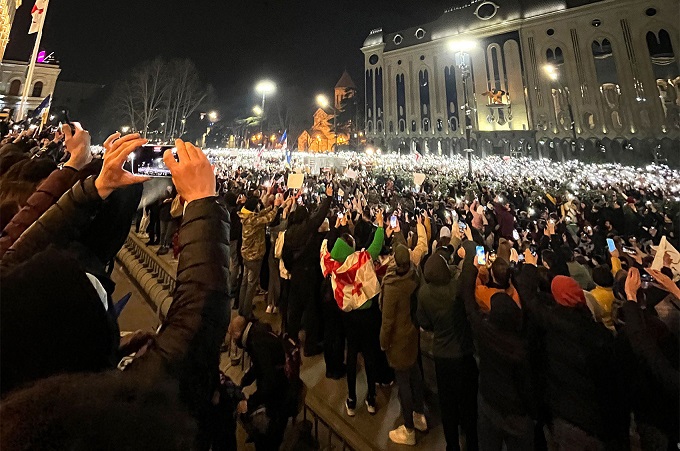
The result is a striking paradox: large majorities of Georgians consistently favor walking along the path toward EU membership, yet their government moves in the opposite direction. In late 2024, Georgian Dream announced it would suspend EU accession negotiations until 2028, triggering sustained protests across the country. The EU responded by withholding €121 million and freezing the start of accession talks, with the Biden Administration choosing to withhold an additional $95 million in assistance. The country now faces a deepening divide between the implications of the government’s policy choices and public sentiment. Meanwhile, Georgian Dream has cultivated closer ties with non‑Western powers: trade with Iran has tripled since the party came to power in October 2012, and Chinese surveillance technology supplied by Huawei and Hikvision has been deployed in ways that raise concerns about its use against protesters.
Yet Georgia’s significance lies less in its governing party’s choices than in what those choices reveal about the limits of structural opportunity. The Middle Corridor presently runs through Georgian infrastructure: the Baku‑Tbilisi‑Ceyhan pipeline and the Baku‑Tbilisi‑Kars railway make Georgia essential to east‑west connectivity. This geographic reality has meant that external powers must engage Georgia on terms that preserve transit infrastructure, regardless of its domestic politics. While Tbilisi has avoided provoking Moscow, its relations with the West have deteriorated sharply, marked by hostile rhetoric toward Western diplomats and a rejection of EU conditions.
Georgia appears to be betting that geographic reality will force continued Western economic engagement regardless of political friction, though this assumption grows more precarious as the relationship sours. Yet this leverage depends on Armenia and Azerbaijan remaining at odds. Should normalization between Yerevan, Baku, and Ankara succeed in opening direct transit routes, then it might result in a new main Middle Corridor route, bypassing Georgia in favor of TRIPP, which would be both shorter and more direct (although the Georgian route provides access to Black Sea ports—a strategic advantage). Tbilisi’s current indispensability thus needs to be understood as conditional, not permanent. This could make Georgia’s failure to exploit its strategic position, while it still holds it, all the more consequential.
Georgia thus offers a cautionary lesson: windows of opportunity require not just favorable external conditions but domestic leadership willing to exploit them. Structure creates possibilities; leadership decides whether to use them. Georgia’s trajectory poses a question for the entire region: if domestic politics can overwhelm strategic logic so completely in one case, how durable are the gains being made elsewhere?
TRIPP: A Bet, Not a Breakthrough
TRIPP exemplifies both the possibilities and the uncertainties of the current moment. The agreement grants the United States exclusive development rights to a corridor connecting Azerbaijan to its Nakhchivan exclave via Armenian territory, with a U.S.‑structured consortium of commercial firms operating the necessary rail and road links, commodity transport infrastructure, and communications networks. Armenia will retain sovereignty, the corridor will operate under Armenian law, while the United States takes responsibility for ensuring it “operates safely for all parties.” Critical to the route’s long‑term viability will be its function as a genuinely neutral commercial passage; one that companies from any country, Western or non‑Western (including Iran and Russia), can use without political restriction. For this to work, no stakeholder, Western or non‑Western, may object to any company from any country using it.
What makes TRIPP particularly revealing is its symbolic character. As one presidential adviser involved in the negotiations explained, TRIPP functions as an “evil eye talisman;” a deterrent whose power lies in the signal it sends rather than in any concrete enforcement capacity. The United States is not providing a hard security guarantee or deploying forces to the route. There will be no American bases or garrisons in Armenia, much less in Azerbaijan. Instead, the American role is, as another official put it, “holding up the parasol and the umbrella, as needed, but we won’t be trying to change the weather.” Washington appears willing to live with this arrangement partly because the American contribution is fundamentally commercial; there are no U.S. defense commitments, no U.S. troops, and no U.S. security guarantees in the traditional sense.
The effectiveness of such a “talisman,” however, depends entirely on perception; should a regional power decide to test America’s commitment, the absence of traditional defense guarantees could expose the arrangement’s limitations. The gamble is that commercial interests can provide sufficient deterrence in a geography that has historically respected hard power above all else.
This framing captures something essential about the current moment—both its possibilities and its fragility. Regional states are not seeking American hegemony to replace Russian hegemony. They are seeking symbolic deterrents and commercial partnerships that increase their leverage without creating new dependencies. A critical uncertainty remains, however: will TRIPP demonstrate enough credible U.S. commitment to reassure European, Turkish, and South Caucasus partners to advance the corridor, particularly after Trump leaves office, while simultaneously avoiding actions that would trigger severe pushback from Russia, Iran, and China? The very structure of the agreement, commercial rather than military, symbolic rather than enforced, reflects regional preferences for transactional relationships over binding alliances.
TRIPP should be understood as a bet rather than a breakthrough. It is an experiment in whether commercial engagement can substitute for hard security guarantees—an experiment whose results will only become clear over years of implementation. The infrastructure does not yet exist. The Trump Administration’s follow‑through is uncertain, although Vance’s February 2026 visit to both Armenia and Azerbaijan seems to have quelled some previously expressed anxieties. The agreement has also not been tested by any serious challenge from Russia or Iran. For now, TRIPP represents a wager on the new regional logic rather than proof of it.
That being said, the country that has the most to gain from TRIPP has doubled down on its promise. Pashinyan has publicly characterized TRIPP as a strategic opportunity for economic cooperation that could benefit relations among regional powers, including those with strained bilateral ties. Iran’s balanced response to TRIPP shows that caution and pragmatism, rather than ideology, increasingly guide its South Caucasus policy. One could say something similar regarding the Russian reaction. Whether this optimistic framing proves accurate remains to be seen. But the fact that TRIPP has proceeded without triggering the kind of confrontation that characterized earlier Western initiatives in the post‑Soviet space suggests that the current window may offer genuine opportunities for those positioned to exploit them.
A Crowded Card Table
The Krnjević‑Cornell card table metaphor captures another essential feature of the new South Caucasus: the proliferation of external players. Russia and the Euro‑Atlantic community increasingly find their influence diluted not only by regional powers like Türkiye and Iran, whose involvement long predates the current moment, but by newer entrants including China, Israel, some GCC states, and India, which have expanded the competition beyond its traditional contours. This multipolarity explicitly rejects the Cold War‑era binary of Russian sphere vs. Western integration that structured earlier analysis.
Türkiye’s role is particularly significant. As noted above, the 2021 Shusha Declaration elevated Ankara’s relationship with Baku to a formal strategic alliance, and Turkish military support proved decisive in Azerbaijan’s 2020 victory. Yet Türkiye’s influence is constrained rather than hegemonic. Baku has resisted encirclement by any single ally, maintaining pragmatic and relatively stable relations with Moscow even as it moves closer to Ankara. Azerbaijan has even played a mediating role between Israel and Türkiye, helping to establish a red line mechanism in Syria that prevented escalation between forces backed by the two neighboring powers. This demonstrates that regional states can leverage external partnerships without becoming captives of them, at least when they have sufficient leverage to begin with.
Iran presents a more complex case. Tehran has repeatedly expressed opposition to the opening of corridors that might benefit its regional rivals, and spokesmen for the Revolutionary Guard Corps had, in years past, threatened military intervention if regional borders were redrawn. Yet having been subjected to a military campaign that demonstrated Israeli supremacy and strong American backing, Iran responded with relative silence to TRIPP’s inauguration. This reflected Tehran’s diminishing capacity and willingness to counter shifting power dynamics. For Armenia, Iran’s engagement, or at least its interest, in regional projects backed by the United States creates a favorable environment where sovereignty, security, and economic stability can be safeguarded. Iran remains neither a guarantor nor a bystander, but a decisive variable in the shifting balance.
China, meanwhile, steadily expands its economic and political presence. Chinese goods already transit westward via Azerbaijan, Georgia, and Türkiye at rapidly increasing rates, making Baku an important hub for the Belt and Road Initiative. The Middle Corridor’s strategic importance has risen for both Washington and Beijing, creating opportunities for regional exporters while intensifying competition. Notably, four of five states along the Middle Corridor—i.e., Azerbaijan, Kazakhstan, Türkiye, and Uzbekistan—are members of the Organization of Turkic States, with Tbilisi maintaining strong strategic ties with both Ankara and Baku. This emerging architecture offers regional states multiple pathways for engagement, reinforcing the ability of well‑positioned states to play external powers against one another.
The Window May Not Stay Open
The transformation described in this article is real yet provisional. Some analysts in Washington have begun quietly voicing concerns about what Russia’s overextension might mean beyond Ukraine. According to a former U.S. official who used to be involved in regional policy, Washington is monitoring the North Caucasus, where Moscow’s control over Dagestan, Chechnya, and other Russian republics could weaken as the Kremlin remains stretched thin by the war in Ukraine. Such concerns carry particular weight for Azerbaijan, which has strong interests in stability along its northern border. Indeed, Baku may be among the world’s most invested stakeholders in Russia avoiding internal fragmentation; a paradox that shapes how regional states approach their own relationships with Moscow.
For American policymakers, instinct favors managed stability: the same Russian weakness that enabled the TRIPP breakthrough could, if it deepens, generate unpredictable regional turbulence. Yet this framing may overstate the risks. Russia has historically been the primary driver of regional developments, and its further retrenchment could just as plausibly strengthen the case for alternative corridors while motivating regional powers to invest in their security.
Yet preferences do not determine outcomes. Russia’s structural vulnerabilities, including adverse demographics, the strains of prolonged war, and persistent risks of separatism in the North Caucasus, Volga region, and parts of Siberia, are not contingent on what Washington or Baku would prefer. The irony is that the very Russian weakness that has enabled the current window of opportunity could, if it deepens beyond a certain threshold, generate the kind of regional turbulence that neither American nor Azerbaijani policymakers want to manage.
Moreover, the staying power of Trump’s “business diplomacy” approach remains unproven. A key uncertainty remains whether U.S. engagement will prove sufficiently sustained to ensure not only a peace deal but its effective implementation. Because Trump prefers to use informal channels and rely on a small network of close, trusted friends and advisors, his ability to dock the results of his personalized diplomacy to domestic and interstate institutions that can handle day‑to‑day challenges is quite limited.
The question of reversibility haunts the entire transformation. De Waal’s “End of the Near Abroad” framework captures a genuine inflection point while remaining cautious about permanence. Russia may return to more assertive engagement once its Ukraine commitments ease. Many Western scholars have suggested that Moscow’s influence has genuinely diminished but may be reversible, particularly if the conflict in Ukraine concludes favorably for Russia. All three South Caucasus states are hedging against exactly this possibility, which is why even Azerbaijan, the most successful exploiter of the current window, has maintained pragmatic ties with Moscow rather than burning bridges. That said, Aliyev’s public accusation at the 2026 Munich Security Conference that Russia deliberately targeted Azerbaijan’s embassy in Kyiv, combined with his continued engagement with Zelenskyy, suggests that the pragmatic relationship is under real strain, and that Baku is willing to let Moscow know it (and not just behind closed doors, either).
The differential capacity of the three South Caucasus states to lock in gains before the window closes may prove decisive. Azerbaijan, with its energy leverage, Turkish alliance, and resolved territorial conflict, is best positioned to make the current moment permanent. Armenia, still desperately dependent on Russia and lacking structural leverage, may find its recent gains erode if Moscow reasserts itself. And Georgia, having chosen not to exploit its strategic position, may discover that the window has closed with Tbilisi having secured nothing.
The Opportunity for American Policy
The Trump Administration’s opportunity in the South Caucasus lies not in replacing Russian hegemony with American primacy, but in recognizing that sustainable engagement requires respecting these states’ circumstances and their limits. This sidesteps the democracy‑promotion and NATO‑expansion frameworks that shaped earlier U.S. engagement in the post‑Soviet space—approaches that generated expectations Washington was rarely prepared to fulfill.
The concept of “keystone states” that Krnjević and others have developed, including the U.S. Naval War College’s Nikolas Gvosdev, offers a useful framework for understanding what effective engagement might look like. Azerbaijan, like Kazakhstan and Uzbekistan in Central Asia, possesses sufficient weight and autonomy to engage major powers on its own terms rather than as a dependent client. Treating such states as partners rather than clients, accepting their simultaneous relationships with competitors, working through commercial rather than military mechanisms, and providing symbolic backing rather than binding commitments may prove more effective than the integration‑or‑confrontation framework that characterized some earlier post‑Cold War policies pursued by previous U.S. administrations and its European allies.
But American policymakers should be clear‑eyed about the variation within the region. What works for Azerbaijan, a state with genuine leverage, may not work for Armenia, which requires more substantive support to avoid sliding back into Russian dependence. And Georgia may end up no longer being a viable partner at all, regardless of the opportunities on offer.
The South Caucasus has not pioneered a new form of sovereignty so much as it has demonstrated what happens when a hegemon gets distracted: small states get room to maneuver, and the outcomes depend on their resources, constraints, and their leaders’ choices. The region has returned to its historical pattern as a geopolitical crossroads where multiple powers compete, but none dominates. This part of the world, Krnjević argues, “stands a chance of no longer remaining merely an object of major power competition—a geography to be won and lost by others; it is, rather, on the cusp of becoming a distinct, autonomous, and emancipated subject of international order.”
That chance is real; but it is a chance, not a guarantee. For the United States, this reality demands both engagement and humility. The three South Caucasus states are navigating a window of opportunity holding very different hands of playing cards. American policy that recognizes this variation‑offering partnership calibrated to each state’s actual capacity and circumstances has the best chance of producing durable results. The card table has room for everyone willing to play, but the hands that have been dealt are far from equal. American policy should be crafted accordingly. And it should always remember that a new round of play will inevitably follow once the current one plays itself out.
About the Author:
Laura Linderman is a Senior Fellow and Director of Programs at the Central Asia‑Caucasus Institute (CACI) of the American Foreign Policy Council (AFPC). She previously served as a Senior Fellow at the Atlantic Council’s Eurasia Center and has taught South Caucasian studies to U.S. diplomats at the Foreign Service Institute. The views expressed in this essay are her own.
Read the article here: https://bakudialogues.idd.az/articles/divergent-paths-in-the-south-caucasus-strategy-survival-retreat-04-03-2026
Russia’s Strategic Losses Are the US’ Gain in Eurasia
By Mamuka Tsereteli
A weakened Russia is still a Russia that is more comfortable with taking risks.
Russia’s war in Ukraine has produced a paradox for US strategy: it has significantly reduced Russia’s strategic long-term power while hardening Moscow into a more dangerous, risk-tolerant adversary for the United States and its allies and partners in Europe, the South Caucasus, and Central Asia. The challenge for policymakers is to lock in the strategic setbacks Russia has incurred—geopolitical, economic, demographic, and technological—while managing escalation risks and preparing for a prolonged confrontation in the Russian neighborhood.
Russia’s most serious long-term strategic vulnerabilities are structural: adverse demographics, growing dependence on and asymmetry with China, and persistent risks of Islamic radicalism and separatism in the North Caucasus, the Volga region, and parts of Siberia. NATO enlargement, often presented by the Kremlin as an existential threat, has served more as a domestic mobilization tool than as Russia’s most acute security challenge. Yet the narrative of Western encirclement and historical invasions was a central ideological driver of the decision to attack Ukraine in 2022; it must be taken seriously when assessing both Russia’s losses and its adaptive gains.
Four years later, Russia has failed to achieve its declared objectives in Ukraine and has instead exacerbated nearly all of its long-term strategic weaknesses. At the same time, it has adapted militarily and politically in ways that complicate Western assumptions about coercion, deterrence, and the durability of authoritarian war economies.
Russia's Wartime Resilience and Adaptation
Militarily, Russia today has a more combat-effective force than on the eve of the invasion, despite massive losses. Its armed forces have adapted to large-scale attritional warfare, integrating drones, electronic warfare, artillery, air defenses, and glide bombs into a coherent operational system optimized for prolonged, high-intensity conflict in its neighborhood.
Economically, sanctions have constrained access to advanced technology but failed to collapse Russia’s war-making capacity. Most Russian missiles still contain Western components, indicating that Russia has found ways to circumvent sanctions. Moscow has rapidly expanded munitions and drone production, relying on simpler designs, stockpiles, and third-country supply chains. This experience calls into question assumptions that broad economic pressure alone can quickly neutralize the military capabilities of such a large, mobilized authoritarian state.
Politically, the Kremlin has used the war to tighten internal control, suppress dissent, and bind elites more closely to regime survival. The absence of large-scale unrest despite military mobilization and high casualties indicates a degree of internal resilience that Western observers underestimated and suggests that regime stability cannot be assumed to erode simply because of the costs of an extended war.
Russia has also learned to incorporate Western domestic politics into its strategy, banking on legislative delays, industrial bottlenecks, and public fatigue in the United States and Europe. For policy purposes, this underscores that timelines favor actors with fewer internal constraints and that adversaries are actively planning around perceived Western political fragility.
Large-scale emigration adds another layer. The departure of hundreds of thousands of skilled Russians has created globally dispersed communities embedded in allied economies that present a persistent counter-intelligence and sanctions-evasion challenge. This is less an immediate security crisis than a slow-burning vulnerability that will require long-term attention from intelligence, law enforcement, and financial regulation communities.
Russia is Losing Its Periphery
Geopolitically, the war has produced outcomes directly contrary to Moscow’s core stated aims. Russia sought to halt NATO enlargement and push Western forces away from its borders; instead, Finland and Sweden have joined the alliance, bringing capable militaries and advanced economies into NATO’s fold. Finland’s accession alone adds more than 1,000 miles of NATO-Russia border and transforms Northern Europe into a reinforced, integrated theater for allied defense planning. This represents a net strategic gain for the United States and its allies, achieved without direct combat with Russian forces.
Even more consequential is the transformation of Ukraine. After four years of large-scale war, Ukraine now has one of Europe’s most experienced, innovative, and resilient land forces. In practice, it functions as a de facto frontline NATO partner, anchoring the defense of Europe’s eastern flank and extending allied strategic depth eastward even without formal membership.
From Moscow’s perspective, this is a strategic nightmare. Instead of a neutral or pliable neighbor, Russia now faces a hostile, permanently militarized state that constrains its military options across Eastern Europe. From a Western perspective, Ukraine represents a cost-effective force multiplier, in which relatively modest budgetary support yields substantial increases in Russian military attrition and in European security. This is a major strategic benefit for the United States in any future relationship with Russia, whether adversarial or friendly.
Russia has also lost influence across the post-Soviet space. Its failure to prevent renewed conflict between Armenia and Azerbaijan severely damaged its credibility as a security guarantor in the South Caucasus. It opened space for deeper EU and, most importantly, US engagement. In Central Asia, governments are increasingly hedging among Russia, China, the EU, Turkey, and the United States, taking advantage of Moscow’s reduced capacity to enforce its preferences.
Meanwhile, Russia’s position in Syria and parts of the Middle East has eroded as other actors, including Turkey and the United States, test and expose the limits of Russian power projection. Recent developments in Venezuela and the Russian shadow oil fleet further damage Russia’s international reputation and mythology of its “global power” capacity.
These trends collectively undermine Russia’s claim to be the indispensable security arbiter in its neighborhood and reduce its ability to trade regional influence for concessions in Europe or elsewhere. For US policy, they create openings for calibrated engagement in the South Caucasus, Central Asia, and the Middle East, where modest investments in diplomacy, security assistance, and economic connectivity can yield outsized strategic returns.
Russia’s list of strategic losses includes demography and human capital. According to CSIS, Russian forces have suffered approximately 1.2 million casualties, including as many as 325,000 killed, since February 2022. A sizable share of young men are no longer able to join the labor force and form families. The casualty rates are higher in areas populated by ethnic minorities, increasing discontent with the federal government in those areas, and igniting separatist feelings in the North Caucasus, Volga region, and Siberia.
Emigration has compounded these battlefield losses. Estimates vary, but it is clear that hundreds of thousands left after February 2022 to avoid mobilization and for political and economic reasons. These flows have disproportionately involved young, urban, highly educated professionals: engineers, programmers, scientists, finance specialists, and entrepreneurs.
Economic trends reinforce the picture of Russian strategic losses. Following the 2023–2024 growth driven by defense spending, Russia’s GDP growth slowed sharply in 2025. Budget deficits are growing. Oil revenues, initially resilient, are now subject to structural pressures from price caps, discounts on Russian crude, stricter enforcement of sanctions, and unfavorable exchange-rate developments.
The most significant loss is that of natural gas exports. Before the war, Russia supplied 40 percent of EU gas consumption; by early 2023, pipeline deliveries had fallen by roughly 90 percent from historical levels, and exports dropped from about 142 bcm in 2021 to 31 bcm in 2024, further reduced to 18 bcm in 2025.
Russia’s pre-war model of energy leverage over Europe has effectively collapsed. Increased volumes to China and continued exports to Turkey and some post-Soviet markets cannot fully compensate for the loss of volume or political leverage.
The Ukraine War's Implications for US Partners in the Caucasus and Central Asia
The war has imposed profound demographic, economic, technological, and geopolitical costs on Russia, many of them structural and not easily reversible. Yet Russia is not strategically broken: it has adapted militarily, reoriented its economy toward war, and demonstrated political resilience. The United States, therefore, faces a Russia that is weaker in aggregate power but more experienced in high-intensity warfare, more dependent on China, and more willing to accept risk.
US strategy must therefore treat Russia not as a declining power to be waited out, but as a weakened yet embittered adversary that will remain capable of sustained confrontation, particularly if supported by China. A major strategic question for the United States is whether Russia can still be decoupled from China, or whether this has become a lost cause.
The next major risk from post-war Russia will be its desire to restore its position of power in parts of the post-Soviet space. Russia will most likely continue to conduct coercive operations in the Baltics, testing NATO’s cohesion. However, its primary focus will be on neighbors in the South Caucasus and Central Asia, where Russia retains greater influence and expects less resistance.
The key case to watch this year is Armenia. Upcoming parliamentary elections in June create opportunities for manipulation to generate chaos and instability. Armenia is currently perhaps the most significant irritant to Russia in the former Soviet space. Some Russian propagandists have already called for a “Special Military Operation” in Armenia, similar to the invasion of Ukraine. The Trump Route for International Peace and Prosperity (TRIPP) project—connecting mainland Azerbaijan with the Azerbaijani exclave of Nakhchivan and onward to Turkey via Armenian territory—represents a major strategic challenge for both Russia and Iran.
On January 13, 2026, US secretary of state Marco Rubio and Armenian foreign minister Ararat Mirzoyan announced a TRIPP Implementation Framework (TIF) following their meeting in Washington. US vice president JD Vance then visited Armenia and Azerbaijan, emphasizing the strategic level of engagement.
While Russia has not expressed open opposition to the project, this level of US engagement in the South Caucasus runs counter to Russian strategic interests. Russia still maintains significant leverage over Armenia: it operates a military base in Gyumri and controls major strategic assets, including the country’s railway system and energy infrastructure. Russia also possesses significant soft-power tools to influence Armenian elections.
US interests in resource-rich Central Asia dictate American leadership in Black Sea-Caspian connectivity. A strategy focused on targeted diplomacy, infrastructure initiatives, and security cooperation can balance Russia’s residual influence without requiring large-scale US engagement. The United States has already taken several proactive steps. The TRIPP project is a powerful signal, and inviting Kazakhstan and Uzbekistan to the G20 Summit in Miami in 2026 is another move to elevate the region’s global significance. The next step should be to build on the TRIPP and C5+1 initiatives and expand the political scope of TRIPP to encompass the entire Black Sea-Trans-Caspian connectivity space, covering energy, minerals, fertilizers, data, and related sectors.
Finally, time in the Ukraine War is not neutral. Prolonged conflict tends to benefit actors capable of suppressing dissent, mobilizing societies, and absorbing losses more resiliently. This is placing democratic coalitions at a structural disadvantage unless they adapt politically, militarily, and economically. The central task for US policy is to convert Russia’s current losses into durable strategic realities while preparing institutions, alliances, and industrial and infrastructure bases for a prolonged period of strategic competition in Europe and Eurasia.
About the Author:
Mamuka Tsereteli is a senior fellow for Eurasia at the American Foreign Policy Council (AFPC) and a senior fellow at AFPC’s Central Asia-Caucasus Institute. He has more than thirty years of experience in academia, diplomacy, and business development, with a focus on economic security, business, and energy development in the Black Sea-Caspian region. Previously, he served as a research director at CACI and as a professor at Johns Hopkins University’s School of Advanced International Studies (SAIS). He also directed the Center for Black Sea-Caspian Studies at the School of International Service (SIS) at American University (2009-2013) and served as an assistant professor at SIS (2007-2011). Dr. Tsereteli is also a co-founder of the American University Kyiv, a newly established university in Ukraine, in partnership with Arizona State University.
Read the article here: https://nationalinterest.org/blog/silk-road-rivalries/russias-military-losses-are-the-us-gain-in-central-asia
Special Report: An American Strategy for Greater Central Asia
EXECUTIVE SUMMARY
America needs an effective strategy for Greater Central Asia to enhance its competitive position in a region that will significantly impact the Russia-China relationship, geopolitical competition in Asia, and key resource markets including uranium, oil, and natural gas. The proposed strategy ensures open access in Greater Central Asia while securing opportunities for profitable American investment through technological partnership, resource development, and logistical facilitation.

FINDINGS:
- Greater Central Asia requires an inclusive regional definition that includes Azerbaijan, Afghanistan, and considers Mongolia, Georgia, and Armenia as critical extensions of the core region.
- The region represents significant opportunities for U.S. investment and access to critical resources including uranium, rare earths, and lithium that are increasingly important to America's technological advancement.
- The current U.S. bureaucratic structure hinders a unified regional approach, with different agencies treating interconnected parts of Greater Central Asia as separate regions.
- Greater Central Asia lies at the intersection of multiple nuclear powers' interests, making stability in the region vital to global security.
- The region is central to U.S.-China competition, as China's pathway to Europe and the Middle East runs through Greater Central Asia.
RECOMMENDATIONS:
- Appoint a Special Presidential Envoy for Greater Central Asia at the National Security Council to coordinate U.S. strategy and activities across the region.
- Create a non-governmental U.S.-Greater Central Asia Business Council to assist with regional economic integration and standardization.
- Establish a Greater Central Asia Regional Security Framework focused on intelligence sharing and counter-terrorism cooperation.
- Rebrand the U.S. platform for regional interaction as C6+1 and prioritize region-wide initiatives over those directed at individual states.
- Accelerate engagement with emerging elites through educational programs and professional advancement opportunities that attract them to the U.S.
Click here to download the full report.
The End of the PKK?
By Halil Karaveli
Ocalan has some incentive to take Bahceli’s—and by extension the Turkish government’s—proposal seriously. Although the PKK is still able to execute the occasional terrorist attack against Turkish targets, it has lost its military campaign in Turkey. The group survives in the Qandil Mountains in northern Iraq, where its headquarters are located. But there, too, Turkey’s drones and a ring of forward bases have hemmed in the PKK, preventing the group from using northern Iraq’s mountainous terrain to stage attacks into Turkey. Ankara’s close partnership with the Kurdistan Regional Government, which leads the semiautonomous Iraqi region, further reduces the PKK’s room for maneuver. With the group’s military prospects looking grim, Ocalan, who is entering his late 70s, has reason to get behind a political solution. Back in 2013, he was quoted as saying, “I want to see peace before I die.”
The political opening in Turkey raised hopes for a settlement with the PKK, but it is the recent fall of the Syrian president Bashar al-Assad that could truly presage the group’s end. Offshoots of the PKK remain active in and in control of northeastern Syria, where their militants have fought alongside the United States in the battle against the so-called Islamic State, or ISIS. But with the collapse of the Assad regime comes an opportunity for Kurdish-majority regions in northern Syria and their militias to be integrated with the rest of the country. Losing this safe haven could be the last straw for an already weakened PKK.
The end of the organization, however, is far from certain. The Turkish government has tried peace negotiations with the PKK before, in 2009 and 2013, to no avail. And despite Ocalan’s status in the group, it is not a given that the Iraqi-based acting leadership would heed his call to disarm and disband. Indeed, the day after Bahceli advanced his proposal for Ocalan’s release, the PKK carried out a terrorist attack at a military-industrial complex outside Ankara, killing five civilians. Moreover, if an agreement with the PKK is not part of a larger arrangement securing the equal status and democratic rights of Turkey’s Kurdish population, simmering discontent could once again spill over into armed insurgency. And if a militarized, semiautonomous, U.S.-backed Kurdish region across the border in Syria continues to harbor fighters and fuel secessionist aspirations, the threat of a PKK resurgence would remain.
These obstacles cannot be discounted. But the confluence of the domestic political developments in Turkey and disruption across the region has raised the possibility that they can be overcome. More than at any time in recent history, there is a real prospect that the PKK could disband—finally removing a threat that has plagued Turkey for the past 40 years.
SAFE HAVEN
Syrian support has long been vital to the PKK’s survival. From the early 1980s, the Syrian dictator Hafez al-Assad allowed Ocalan and his followers a base of operations on Syrian-controlled territory. Assad was an ally of the Soviet Union, and the PKK adhered to Marxism-Leninism until the end of the Cold War. His backing of the PKK endured into the 1990s, in part driven by Syria’s historic resentment of Turkey since the Turkish annexation in 1939 of Alexandretta, a province that at that time belonged to the French mandate of Syria. Only in 1998 did Assad expel Ocalan, yielding to the threat of military intervention by Turkish President Suleyman Demirel. Ocalan was captured in Nairobi, Kenya, in February 1999 and promptly extradited to Turkey. The PKK relocated its headquarters to Qandil in 2003 after the U.S. invasion of Iraq, exploiting the power vacuum created when Saddam Hussein was overthrown.
Syria assumed renewed importance for the PKK after the start of the country’s civil war. In 2012, Bashar al-Assad withdrew government forces from northeastern Syria, allowing a Syrian offshoot of the PKK, the Democratic Union Party (PYD), and its military wing, the People’s Protection Units (YPG), to establish a proto-state—the Autonomous Administration of North and East Syria, also known as Rojava or western Kurdistan—in the region, which has a large Kurdish population. Assad, in effect, handed control of a third of his country, including most of its oil fields, to Kurdish authorities. In return, the Kurdish militias ceased their armed resistance to the regime, thus weakening the larger opposition movement. And Assad was able to deal a blow to Turkey, which was supporting the uprising against his rule.
Turkey has tried peace negotiations with the PKK before, to no avail.
Turkey, fearing that the empowerment of the PKK’s Syrian offshoot would embolden the broader organization, initiated peace negotiations with Ocalan in 2013. But after the PKK attempted to seize control of urban centers in the Kurdish-majority provinces of southeastern Turkey in 2015, talks broke down, and the Turkish army launched a campaign to dislodge militants from the cities. The PKK was defeated in Turkey, but it lives on through close links with the Syrian-based PYD and its military units. The PYD is incorporated into the Kurdistan Communities Union, an umbrella organization founded in 2005 that embraces the political goals of the PKK and is led by Ocalan. PKK members have joined the YPG, which makes up the bulk of the Syrian Democratic Forces (SDF), the coalition that serves as the military force of northeastern Syria’s self-governing region and is a close U.S. partner in the fight against ISIS. The commander in chief of the SDF, Mazloum Abdi, is a former PKK member who worked with Ocalan when the latter resided in Syria.
Turkey has carried out three limited military operations against the PKK’s affiliates in Syria: in the al-Bab region in 2016, in the Afrin region in 2018, and in a corridor running between the cities of Tel Abyad and Ras al-Ayn in 2019. The Turkish military maintains a partial buffer zone in northern Syria, but the U.S. military presence in the region has so far deterred a full-scale Turkish intervention to eliminate PKK-affiliated militias. The official U.S. mission is to provide training, combat support, and military cover to the SDF, but in practice this means that U.S. forces work with the YPG. For Ankara, the difference between the YPG and the PKK is merely one of branding. Washington’s collaboration with the Kurdish militias in Syria has thus complicated U.S.-Turkish relations.
THE PRESSURE BUILDS
With Assad gone, however, the proto-state in northeastern Syria may no longer be viable—and the United States will have to consider options other than relying on PKK affiliates to prevent the return of ISIS. Hayat Tahrir al-Sham (HTS), the Islamist group that overthrew the Syrian regime in December, has rejected a proposal from Kurdish authorities for a federal system that would allow them to retain their autonomy. The group now leading Syria has a history of clashing with the Kurds: in 2012, after Kurdish authorities first took control in northeastern Syria, HTS’s predecessor, the Turkish-backed jihadist group Jabhat al-Nusra, entered Syria from Turkey to attack the Kurdish militias. More recently, Ahmed al-Shara, HTS’s leader and Syria’s transitional president, has stated that the SDF should be integrated into the national army so that military power will be “in the hands of the state alone.” And Syria’s new defense minister, Murhaf Abu Qasra, told reporters in January that HTS has a backup plan should the SDF refuse to negotiate, stating, “If we have to use force, we will be ready.”
In the weeks since Assad’s fall, senior Turkish officials have repeatedly emphasized their wish to see the YPG disbanded. In December, Turkish Foreign Minister Hakan Fidan described the elimination of the group as Ankara’s “strategic objective,” calling on Syria’s new leaders to dismantle the YPG; expel its commanders, including Syrian ones; and restore central control of all Syrian territory. A few days later, Turkish Defense Minister Yasar Guler echoed that sentiment, stating that Turkey’s “priority is the liquidation of the YPG.”
Syrian support has long been vital to the PKK’s survival.
If HTS and Turkey achieve their objectives, whether through negotiations or by force, the PKK will suffer a fatal blow. From Turkey’s perspective, the main threat is not a military one: the flat terrain along the Syrian-Turkish border is easy to monitor, and unlike the mountainous topography in northern Iraq, it is not suitable for guerrilla warfare. But Ankara does fear that an autonomous, armed, Kurdish-led political entity in Syria could become—if it isn’t already—the focus of Kurdish separatist aspirations in Turkey. That risk has proved manageable in the case of northern Iraq: Ankara and the Kurdistan Regional Government have good relations, and the PKK has been marginalized there. But Syria is a different matter. The Syrian Kurds have closer bonds with the Kurds in Turkey than the Iraqi Kurds do; many are descendants of the refugees who fled to Syria after the suppression of the first Kurdish uprising in Turkey in 1925. Rojava, therefore, is a pole of attraction that northern Iraq never was. The PKK envisions a decentralized system of self-governance that would span the Kurdish regions of Turkey, Syria, Iraq, and Iran. As long as autonomous rule in Syria endures, this dream stays alive.
Now, the biggest obstacle to ending that autonomy and integrating the SDF into a Syrian national force is the United States. Last month, Abdi, the SDF commander, told Le Monde that the group wants the northeastern Syrian region to maintain “administrative autonomy . . . while cooperating with the central government.”He has also affirmed the group’s desire for U.S. forces to remain in Syria to supervise a cease-fire between the SDF and the Syrian National Army, a Turkish-supported militia. But HTS and the Turkish government have rebuffed these aspirations. Only with continued support from the United States can the SDF withstand the pressure from both Syria’s new leaders and their backers in Ankara. Washington, for its part, may be inclined to stand by its Kurdish allies, even at the risk of further estrangement from Ankara. During his Senate confirmation hearing, U.S. Secretary of State Marco Rubio spoke of the importance of cooperation with the SDF to keep ISIS in check and warned of the consequences of “abandoning partners” who have made “a great sacrifice.” President Donald Trump, meanwhile, has been vague about the continued presence of the 2,000 U.S. troops in Syria, saying last week that “they don’t need us involved.”
A PATH TO PEACE?
There is still a path, albeit a narrow one, to a political solution that could bring long-term stability. Disbanding and disarming the SDF and ending the autonomous status of northeastern Syria could help stabilize the country as the new Syrian government consolidates control. Turkey, with the principal threat across its border eliminated, could be convinced to drop its more far-reaching demands on the Syrian Kurds, including the expulsion of all YPG commanders from Syria, and encouraged to reach a mutually acceptable agreement with its Kurdish interlocutors in Turkey, including amnesty for PKK militants, the release of imprisoned Kurdish politicians, and the enshrining of equality between Turks and Kurds. (The last aim would require amendments to Turkey’s constitution, which stipulates that only Turkish can be taught as a mother tongue and that every citizen of the Republic of Turkey is a Turk.) The United States can take Turkey up on its offer to assume leadership of the mission to suppress ISIS, and in the process of negotiations over a U.S. withdrawal from Syria, Washington can push both Ankara and Damascus to guarantee rights for the Kurds.
Ankara is not going to concede Kurdish self-rule within Turkey, as some Kurdish activists demand. The dismemberment of the Ottoman Empire looms large in the minds of Turkish leaders, and the lesson they took is that self-rule inevitably leads to secession. And there is reason to be skeptical that an authoritarian Turkish state would make significant democratic concessions: in November, with outreach to Ocalan already underway, three Kurdish mayors were removed from their offices and charged with abetting “terrorism.”
There is a path, albeit a narrow one, to a political solution.
Yet Turkey’s leaders do seem to recognize the urgency of a settlement. For a state that refused for decades to even acknowledge the existence of the Kurds, the recognition that Kurdish citizens are, in the words of Erdogan’s adviser Mehmet Ucum, “co-owners” of a common republic marks a significant step. And the government is cracking down on the anti-Kurdish far right: in January, Umit Ozdag, the leader of the far-right Victory Party and a fierce critic of the opening to the Kurds, was arrested and charged with “inciting the public to hatred and enmity.” Bahceli’s proposed bargain with Ocalan may not herald a conversion to liberalism, but it does reveal the Turkish political elite’s pragmatism in the face of perceived threats.
Well before the Assad regime collapsed, Ankara was growing worried that regional turmoil could stoke domestic instability. Three weeks ahead of his appeal to Ocalan in October, Bahceli explained, “When we call for peace in the world, we must also secure peace in our own country.” In an address to parliament the same month, Erdogan emphasized the need to “fortify the home front” in the face of “Israeli aggression.” Ankara’s concerns about foreign meddling did not come from nowhere. In November, Israeli Foreign Minister Gideon Saar described the Kurdish people as Israel’s “natural ally” and said that Israel should strengthen its ties with them. And in October, the pro-PKK newspaper Yeni Ozgur Politika republished a section of Ocalan’s Manifesto for Democratic Civilization, written more than a decade ago, in which he suggested that the PKK could align with the United States and Israel against Turkey. Now that Ocalan has changed his tune—in December, the PKK leader spoke of a “historic responsibility to renew and fortify Turkish-Kurdish brotherhood”—Turkish leaders will not want to miss the opportunity to mend an internal divide that an external power could exploit.
Removing the threat of the PKK will depend on many factors. Ocalan must convince his organization that armed militancy is a dead end after the regime change in Syria. The broader Kurdish population will need to see an opportunity for a better future in Turkey. The United States will need to withdraw from Syria, enabling the Syrian Kurdish militias and government to integrate into a new national body. None of these outcomes are guaranteed, but with foresight from Ocalan, the Turkish government, the new Syrian leadership, and the new U.S. administration, all of them are now within reach.
Read the article here: https://www.foreignaffairs.com/turkey/end-pkk
HALIL KARAVELI is a Senior Fellow at the Central Asia–Caucasus Institute and Silk Road Studies Program Joint Center and the author of Why Turkey Is Authoritarian: From Ataturk to Erdogan.
Russia’s Grip on Georgia: Will the Oligarch’s Attempt to Move Georgia Away from the West Succeed?
Central Asia in the Energy Transition
 Svante E. Cornell and Brenda Shaffer
December 4, 2024.
Click to Download
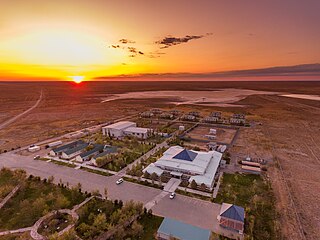
The United States, Europe, the United Nations and more are promoting a top-down energy transition from fossil fuels to renewable energy, which shows no signs of emergence. Under this scenario, Europe and the global market are likely to maintain demand for the energy riches of Central Asia for many decades to come. The gas market of Central Asia itself requires additional gas volumes as well. In order to lower carbon emissions and air pollution and improve public health in Central Asia, the ideal policy in the region is increased access to natural gas that can replace the widespread burning of biomass and lump coal. Current European policies promote expanding electrification and is leading to a new look at nuclear energy. Accordingly, the uranium deposits of Central Asia have become of high commercial and geopolitical interest.
Rising Stakes in Tbilisi as Elections Approach
By Laura Linderman
As Georgia approaches parliamentary elections in October 2024, the South Caucasus state stands at a pivotal juncture. The growing authoritarian tendencies of the ruling Georgian Dream (GD) party threaten to derail the nation’s democratic progress, and its aspirations for Euro-Atlantic integration. In this critical moment, the United States needs to act decisively by leveraging congressional measures to support Georgia’s democratic institutions and counter authoritarian influences there.

The problem is acute, because GD appears increasingly willing to resort to drastic measures to maintain its grip on power. Recently, the party openly indicated that it would call for a ban on the country’s political opposition if it gains a constitutional majority in the upcoming elections.
Georgia’s ruling party has reason to be concerned. Credible international polling by Edison Research suggests that GD is poised for a significant decline in vote share. Those figures reflect growing discontent among the Georgian populace, likely fueled by the government’s authoritarian measures and its failure to address critical economic and social issues. This contrasts sharply with less credible polling by GORBI, which claims GD is set to achieve an unrealistic majority—numbers that GD has never achieved, even at its height in 2012. The credibility of GORBI’s polling is further undermined by the significant public unrest and mass protests in the wake of the country’s passage of a controversial foreign agent law, which has only intensified public dissatisfaction.
It’s no wonder, then, that GD is contemplating potentially drastic political measures to prop up its authority. But its proposal signals a dangerous erosion of democratic norms, and highlights the need for international scrutiny and action, because the implications are profound – both for Georgia’s internal stability and for its international relationships, particularly with the United States and European Union.
Fortunately, Congressional remedies exist. Both the MEGOBARI Act in the House and the Senate’s Georgian People’s Act represent a bipartisan effort to address recent democratic backsliding in Georgia. They aim to impose financial sanctions on individuals undermining democratic processes and human rights, holding accountable those who threaten Georgia’s democratic future. Cumulatively, this legislation underscores the U.S. commitment to supporting the Georgian people, who overwhelmingly support Georgia’s Euro-Atlantic integration, and to countering malign influences, particularly from Russia. The both Acts’ power lies not only in punitive measures, but also in their potential to influence Georgia’s future trajectory by making it clear that the international community will not tolerate the erosion of democratic values.
The MEGOBARI Act, in particular, provides comprehensive incentives for the U.S. to strengthen Georgia’s democratic institutions based on real progress and reform. These incentives include negotiating a more robust trade agreement, enhancing exchanges and a streamlined visa regime, developing a comprehensive economic and modernization package, providing defense equipment and support, and offering a security assurance framework similar to the Ukraine G7 agreement. These positive incentives are essential to show both the Georgian government and its people that a commitment to democracy and reform will bring tangible benefits.
As Georgia faces the potential for electoral fraud and post-election unrest, this legislation (and its companion in the Senate) offers a critical toolkit for the U.S. to support Georgia’s democratic aspirations. Through them, the U.S. can help ensure a fair electoral process and counter external threats to Georgia’s sovereignty. Ultimately, congressional action should be about empowering Georgians to seize this moment and chart a course toward a more democratic and prosperous future. Washington’s role is to provide the necessary support and tools necessary for Georgia to succeed.
The stakes are high, because the upcoming elections in Georgia represent not just a domestic political contest, but a defining moment for the country’s future. The international community, led by the United States, needs to be vigilant and proactive in ensuring that this future is democratic, prosperous, and aligned with the values that the Georgian people have repeatedly affirmed.
Laura Linderman is Senior Fellow and Program Manager at the Central Asia-Caucasus Institute of the American Foreign Policy Council
A Political Inflection Point in Georgia
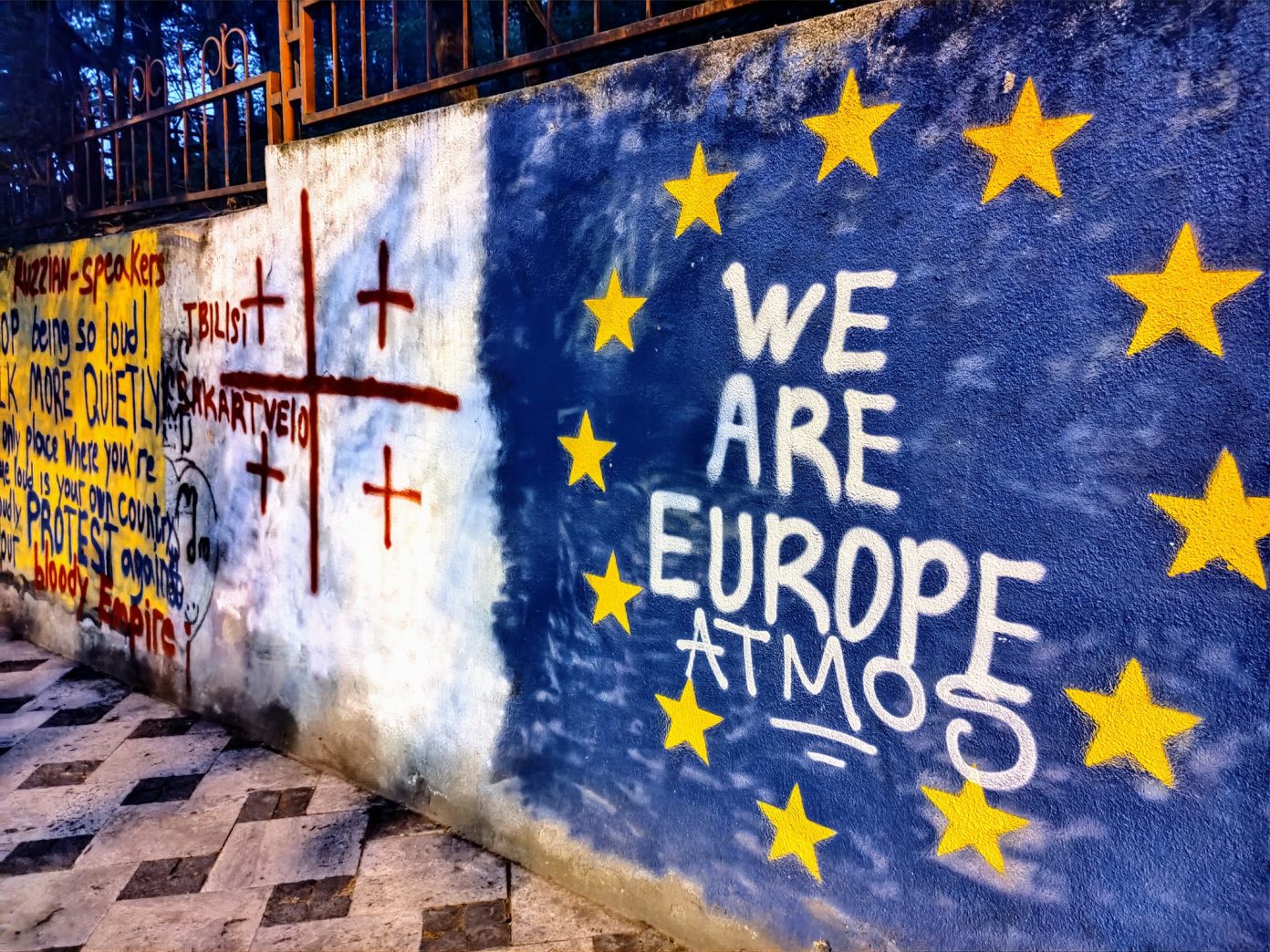
The Republic of Georgia faces a critical juncture ahead of parliamentary elections in October 2024 as escalating political tensions, driven by the ruling Georgian Dream (GD) party's increasingly authoritarian tendencies, threaten the country’s democratic future and its pro-Western trajectory. This situation demands a nuanced understanding of Georgia's complex political landscape and a strategic response from Western partners. Here, a number of trends are noteworthy.
The first is democratic backsliding and a consolidation of authoritarian power. Georgian Dream, once a self-identified social democratic reformist coalition, has embraced right-wing populism and consolidated power in recent years. Its controversial "foreign agent" law, which went into force on August 1st, is clearly aimed at silencing critical NGOs and media ahead of national elections, and represents a blatant attempt to curtail media freedom, target civil society, and suppress dissent.
These policies, which are closely aligned with Russian information operations in the region, are reminiscent of cyclical patterns in Georgia's contemporary history – entailing "democratic breakthrough, democratic advance, democratic rollback, authoritarian consolidation, regime weakening, and regime collapse." Today, the country appears headed for another round of the same. This pattern reflects entrenched challenges in Georgia's political culture, including a tendency towards centralization of power, a disconnect between elites and the broader population, and a zero-sum approach to politics where losing power is seen as an existential threat.
The second are the shifting power dynamics in Georgian society. A new generation, disillusioned by GD's policies and yearning for a European future, is at the forefront of today’s opposition, shifting the locus of resistance from traditional political parties to street protests. Youth see the West as Georgia's only viable path, but their impact is limited by their concentration in the national capital, easy disillusionment and high standards, as well as potential election apathy or disorganization. Despite these potential pitfalls, this generational divide creates a possible opportunity for a new political class to emerge, uniting youth activism with experienced civil society actors. This could happen, post-election, if the remnants of the old elite political class emigrate amid government crackdown.
Third, we are witnessing an erosion of public trust. In recent months, governmental actions have played on existing societal issues like corruption, inequality, and a sense of injustice, fueling widespread discontent and emigration. Nevertheless, the opposition is currently weak and disorganized, and has not shown any focus on these issues. Opposition dynamics continue to be largely centered on mostly unpopular personalities in the political elite, rather than any particular socio-political movement. However, popular discontent with GD has crested because of its anti-Western and anti-democratic positions, which gives even a fractured opposition a potential opportunity heading into the elections. The escalating use of force against largely peaceful protesters has only deepened the chasm between the government and the people. Emigration from Georgia doubled in 2023, primarily driven by those seeking work abroad. And Transparency International's Corruption Perceptions Index indicates a notable three point decline for Georgia over the past year.
Finally, there is a misunderstanding of how Georgians see "The West." U.S. foreign policy professionals often underestimate the deep-seated resentment towards the former ruling party, the United National Movement (UNM), and overestimate the depth of pro-Western sentiment in Georgia. The prevalent narrative of overwhelming pro-Western sentiment in Georgia, often quantified as 80-85% support, is simplistic and in some respects misleading, ignoring complex realities on the ground. While the pro-west moorings of the population are resilient, they are tempered by popular frustration with Western inattention and popular prioritization of local socioeconomic issues.
Western actors bear some responsibility for this state of affairs, often equating Westernization with superficial markers like proficiency in English. The West has also largely taken pro-west sentiments for granted, and shown little initiative to integrate Georgia into Euro-Atlantic structures – giving anti-Western actors an opportunity to gain ground. Moreover, for a certain segment of the Georgian population that is quite poor and lists economic issues at the top of its concern, support for the West is shallow. For these voters, the populist, right-wing narrative (stressing order, stability, unity, and control over culture,) may be more comfortable and understandable.
HIGH STAKES FOR THE FUTURE OF GEORGIAN DEMOCRACY
Against this backdrop, the upcoming parliamentary elections are crucial, with a high likelihood of GD resorting to fraud to maintain its grip on power. As such, the potential for post-election unrest and violence is significant, with a legitimate risk of external actors, particularly Russia, exploiting the instability for their own benefit. As a result, the U.S., historically (though unintentionally) indifferent to the nuances of Georgian politics, now faces a critical inflection point in its relationship with Georgia.
Here, a nuanced American policy – one that strengthens democratic institutions, imposes consequences for anti-democratic behavior, and doubles down on support for Georgia’s pluralistic development – would go a long way toward setting Tbilisi on the right path once more. By leveraging diplomatic, economic, and security tools, the U.S. and its allies can play a crucial role in supporting Georgia's democratic future. But this support must be coupled with a clear-eyed assessment of the challenges involved, and with a willingness to impose concrete consequences for democratic backsliding.
Ultimately, it remains up to Georgians to seize this moment and chart a course towards a more stable, prosperous, and democratic future. Washington’s job is to give them the tools to do so.
ABOUT THE AUTHOR:
Laura Linderman is Senior Fellow and Program Manager at the Central Asia-Caucasus Institute of the American Foreign Policy Council.
US Black Sea Strategy: The Georgian Connection
A US strategy for the Black Sea is long overdue. Russia’s aggression against Ukraine and the involvement of the US, Europe, Iran, and North Korea, have created new geopolitical realities around the area.
While a broad range of political, maritime, economic, and energy security issues have increased the need for clarity in the US approach, one particular recent development is urgent and needs answers.
Russia’s Black Sea fleet has taken a beating from Ukraine. In all, 15 warships have been sunk and 12 damaged in the past two years, most recently the missile corvette Ivanovets on January 31.
That has forced Russia to look for harbors further east, such as Novorossiysk and Tuapse. But there is no safety from Ukrainian aerial and maritime drones there either, as indicated by a January 28 strike on the latter port’s oil refinery.
Recognizing the risk, Russia plans to reactivate a small Soviet-era military facility in Ochamchire in Abkhazia, a Georgian region illegally occupied by Russia. Currently, Ochamchire is a base for Russian FSB patrol boats and is not capable of harboring large naval vessels.
The decision has significant implications for Georgia and its Black Sea-Caspian neighbors, threatening the viability of important trade routes.
Here, some context is necessary. Georgia’s Black Sea ports are in close proximity to Ochamchire and are already serving as connecting links between Europe and wider areas of Central Asia, which includes a range of countries stretching from the South Caucasus to China’s western Xinjiang region.
Ochamchire is also fairly close to the potential point of entry for the planned subsea power cable connecting South Caucasus sources of green energy to the European Union (EU) countries of Romania and Hungary.
This strategic role of the Eastern Black Sea is frequently missing from EU and US policy documents.
Non-EU littoral states are not included in the Three Seas Initiative (3SI), for example. At the same time, the Black Sea ports of Georgia and the so-called “Middle Corridor,” linking the South Caucasus to Central Asia, provide Europe with access to vast resources of energy, metals, coal, cotton, and other goods, as well as to growing markets in an emerging region.
This latter role is particularly important; for Central and Eastern European states, saddled with a decades-long dependency on Russian resources and Russia-linked infrastructure, the South Caucasus and Central Asia can serve as a major potential alternative. This importance may only grow with the post-war development and reconstruction of Ukraine that will follow the current war.
The Middle Corridor, running between Kazakhstan and Georgian Black Sea ports and the Mediterranean ports of Turkey, allows Central Asian states to bypass the geopolitically unstable Russian route.
Some of the claims for this route are overblown. It’s unlikely it will become a major corridor connecting China and Europe. There are significant geographic, political, economic, and governance issues associated with this, meaning it will be unable to match maritime, or other land-based transportation options between China and the EU.
At the same time, the Middle Corridor is extremely important for the countries of Central Asia and the South Caucasus.
According to multiple studies, (see World Bank study, EBRD) the transshipment potential of the Middle Corridor between Europe and Asia via the Caspian Sea will continue to grow and play an increasingly important role between the growing economies of Central Asia/South Caucasus and EU and Mediterranean markets. This will require a combination of investment and efficiency measures and more vigorous intra-regional coordination.
The only suitable outlet for this route is Georgia; the other countries are landlocked and need to transit neighboring states to reach open seas and markets.
But the absence of firm security guarantees from NATO or other military allies also makes Georgia and its Black Sea ports vulnerable.
Russia’s willingness to use military force and gray zone attacks in the Black Sea increases political risk. One way to mitigate this is to engage as many countries as possible in trade and transit via Georgia. Once Georgian ports are important to others, such as Turkey, China, India, and the Gulf States, the pressure for peace can balance potential threats.
Georgia also needs to develop naval defense capabilities with drones and air defense systems and rebuild civil defense and military reserve systems to create at least a basic level of deterrent to Russian aggression.
The US Black Sea Strategy should incorporate support for the free flow of goods and mineral resources between Central and Eastern Europe and Central Asia.
ABOUT THE AUTHOR:
Mamuka Tsereteli, Ph.D. is a Senior Fellow at the American Foreign Policy Council/Central Asia-Caucasus Institute
Some Lessons for Putin from Ancient Rome
ABOUT THE AUTHORS: S. Frederick Starr, is a distinguished fellow specializing in Central Asia and the Caucasus at the American Foreign Policy Council and founding chairman of the Central Asia Caucasus Institute.
A New Spring for Caspian Transit and Trade
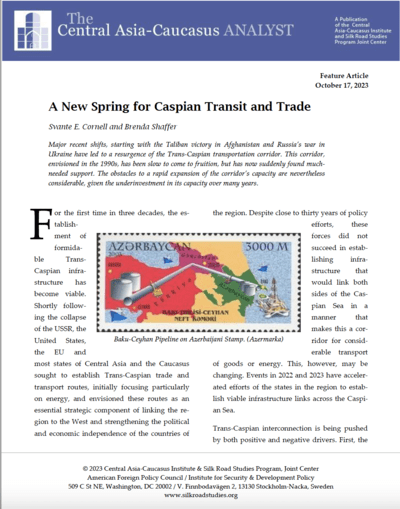 Major recent shifts, starting with the Taliban victory in Afghanistan and Russia’s war in Ukraine have led to a resurgence of the Trans-Caspian transportation corridor. This corridor, envisioned in the 1990s, has been slow to come to fruition, but has now suddenly found much-needed support. The obstacles to a rapid expansion of the corridor’s capacity are nevertheless considerable, given the underinvestment in its capacity over many years.