Wednesday, 15 January 2020 00:00

Greater Eurasia: Russia's Asian Fantasy

Screen Shot 2020-01-23 at 12.20.07 PM

S. Frederick Starr
Kennan Cable No. 46, January 15, 2020

Is there a grand strategy that informs Russia’s activities abroad and, if so, what is it? For years it seemed that President Putin based his foreign policy mainly on his 2005 statement to the Russian nation that the collapse of the Soviet empire “was the greatest geopolitical catastrophe of the century.” The task of Russian policy was therefore to reclaim by whatever means necessary as much control over former Soviet territories as possible. This led to his seizure of Georgian territory in 2008, his Crimean grab of 2014, and his armed incursions into eastern Ukraine in 2014-2019. More recently, it has led to his forcing Kyrgyzstan to join his politics-driven Eurasian Economic Union and his current bullying of Uzbekistan and Tajikistan to follow suit.

In practice, Russia’s foreign moves in places as diverse as Eastern Europe, Syria, and Africa seem to be guided more by opportunism than strategy. This has not sat well with some members of Moscow’s policy-oriented intelligentsia. Modern Russia, after all, is heir to a half millennium of messianic ideologies that justified and encouraged the expansion of territories under Moscow’s rule. Whether building the Third Rome, destroying the Tatars, placing the Cross of St. Vladimir atop the Hagia Sofia in Constantinople, building a Holy Alliance against future Napoleons, protecting Europe against revolution in 1848, conquering Muslim Central Asia in the 1860s, or aspiring to Sovietize Eastern Europe under Stalin, ideas, not mere opportunism, have driven Russia’s actions abroad. Even as Putin repeated his assertion about the collapse of the USSR, a deficit of theory was forming in Moscow’s foreign policy circles.

Read More

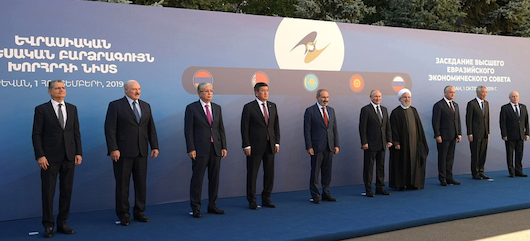
Image via Kennan Cable No. 46: Greater Eurasia: Russia's Asian Fantasy

Published in Staff Publications

Mamuka Tsereteli
The Hill, December 10, 2019

It is in American interests to deter an increasingly assertive Russia. One way of doing this is to strengthen the independence and sovereignty of the countries around Russia, most of which face growing pressure from Moscow. The Black Sea states of Ukraine and Georgia, as well as Moldova and Belarus, are primary targets of Russian power. Other countries of the South Caucasus and Central Asia also face assertive Russian policies. All these nations have suffered the collateral damage of changing ideologies of various administrations in the United States. American disengagement from different parts of the world over the last decade has created a large geopolitical vacuum now filled by Russia, China, and other adversaries.

Read More


Published in Staff Publications

By Mamuka Tsereteli

The West Has an Opportunity, Yet Again, to Push Back Against Russia

November 28, 2018

View Publication

Published in Staff Publications


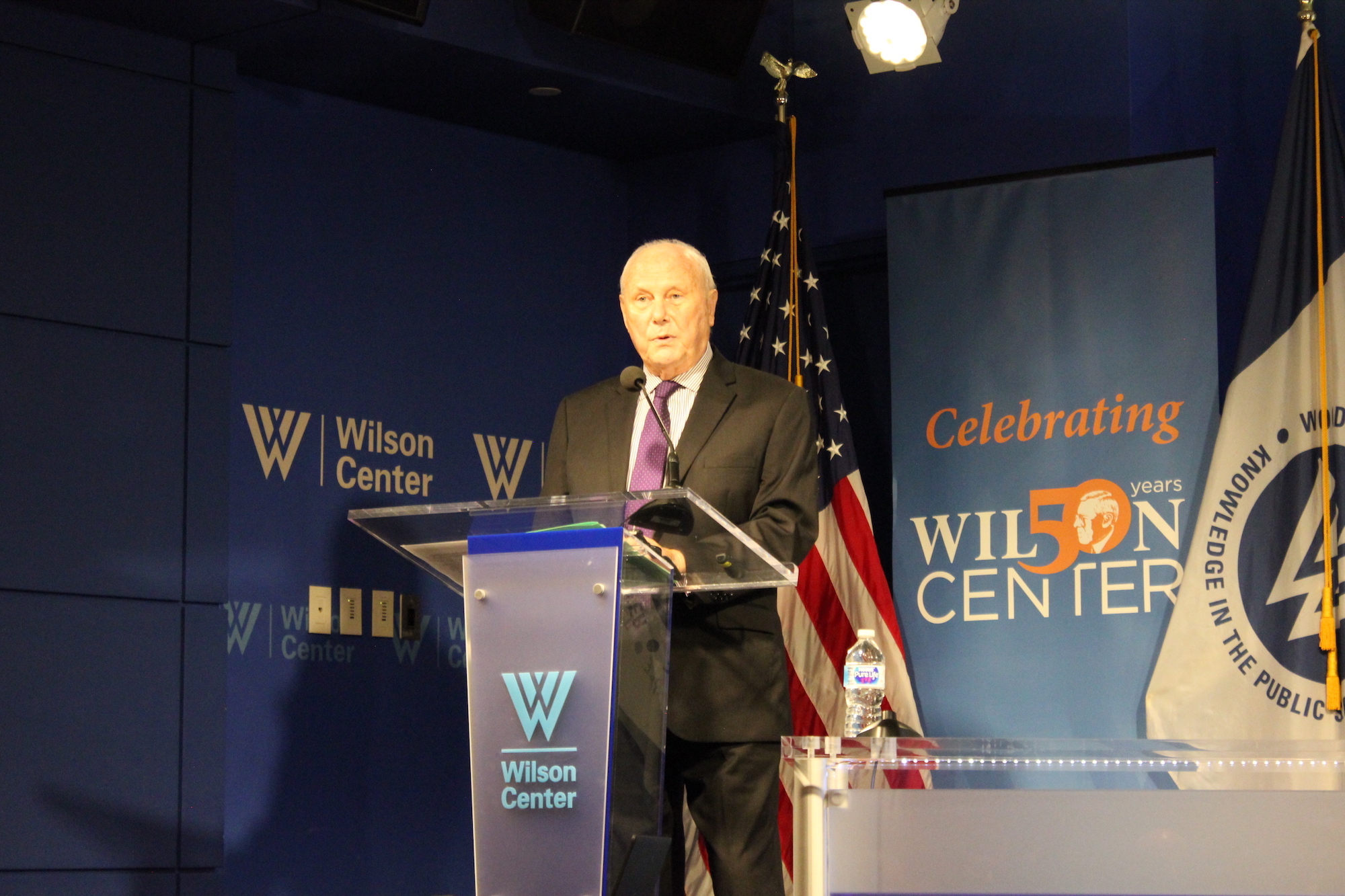
On October 2, S. Frederick Starr addressed the topic of Russia's relationship to Central Asia at the Woodrow Wilson Center entitled "Is Russia Becoming Central Asia's Near Abroad" convened by the Kennan Institute 

The video of the event is available from the following link.

Scroll down to watch the full recording of the event.IMG 0817


Published in News
Tuesday, 11 September 2018 00:00

The Myth of Erdogan's Power

By Halil Karaveli

The Myth of Erdogan's Power

August 2018

Click for full article

Published on: August 29, 2018 
 
Halil Karaveli is a Senior Fellow with the Central Asia-Caucasus Institute & Silk Road Studies Program Joint Center and Editor of the Turkey Analyst. His book, Why Turkey is Authoritarian: From Atatürk to Erdogan (Pluto Press) is published in June 2018.


Published in Staff Publications

isdp

AFPC-Full-Logo