CACI & SRSP co-hosted the Inaugural Central Asia-Nordic Think Tank Forum with the International Institute for Central Asia in Tashkent
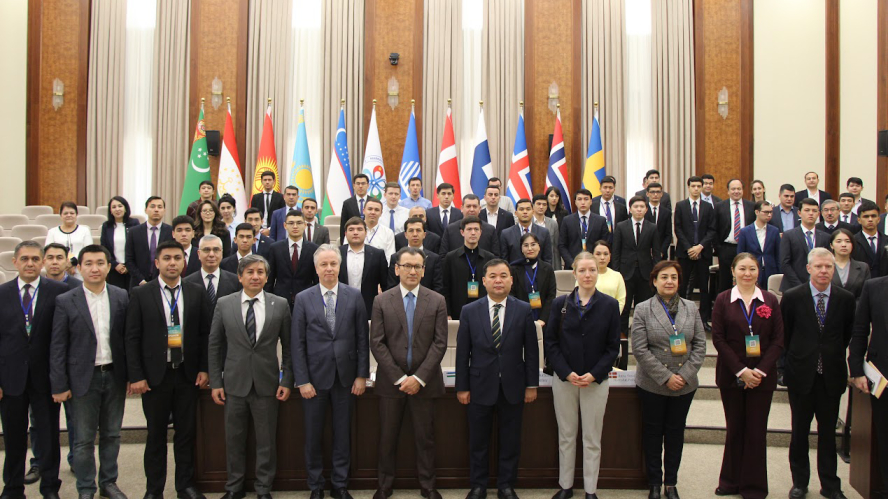
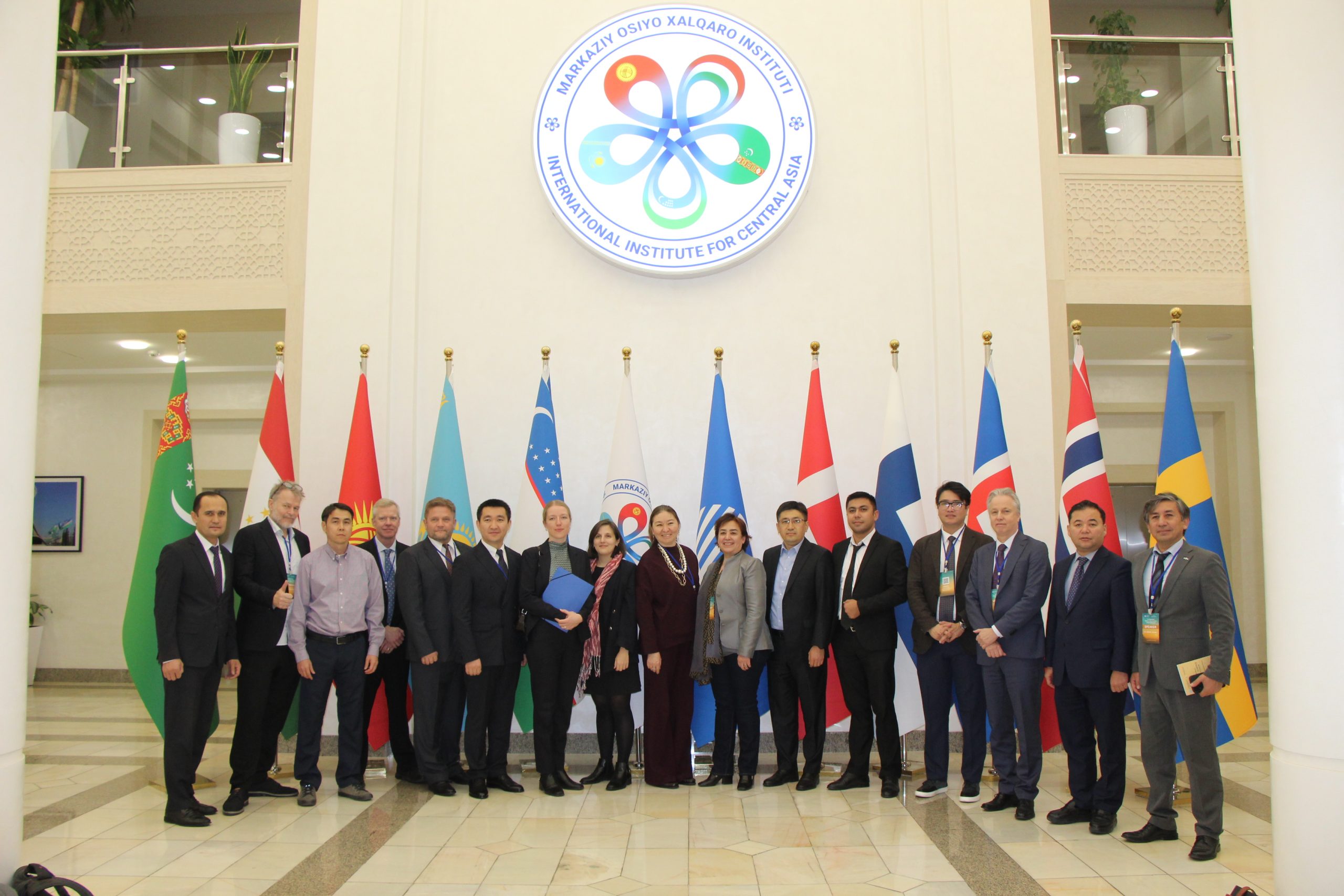
November 26, 2025: CACI & SRSP were honored to co-host the Inaugural Central Asia-Nordic Think Tank Forum with the International Institute for Central Asia in Tashkent, Uzbekistan. The Forum, following up on a May 2025 seminar hosted by ISDP in Stockholm that brought together Nordic and Central Asian experts, seeks to be a driving force in developing closer ties between the Nordic countries and the Central Asian region.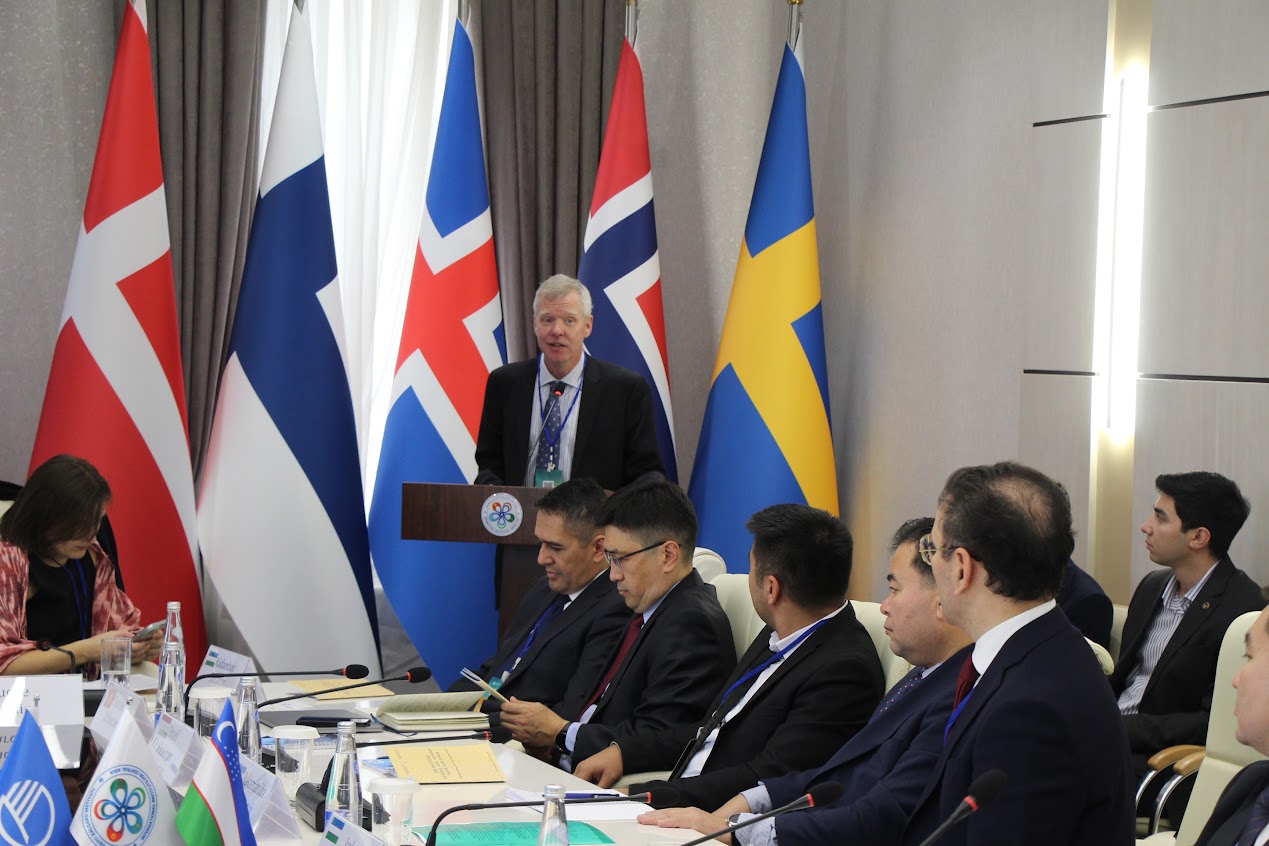
While Nordic countries have had diplomatic relations with Central Asian states for decades, the region has not featured prominently in the foreign policy of Nordic states. Yet the strategic importance of Central Asian states has been identified by the EU, which has rapidly ramped up the level and intensity of its interaction with Central Asia. Finnish President Alexander Stubb’s recent visit to the region suggests the same is happening in the Nordic states. Meanwhile, Central Asian states are expanding their diplomatic networks, and the Nordic region has become a priority for regional states. Kazakhstan and Uzbekistan have resident ambassadors in Stockholm, and Kyrgyzstan has appointed a Special Representative for the Nordic Region.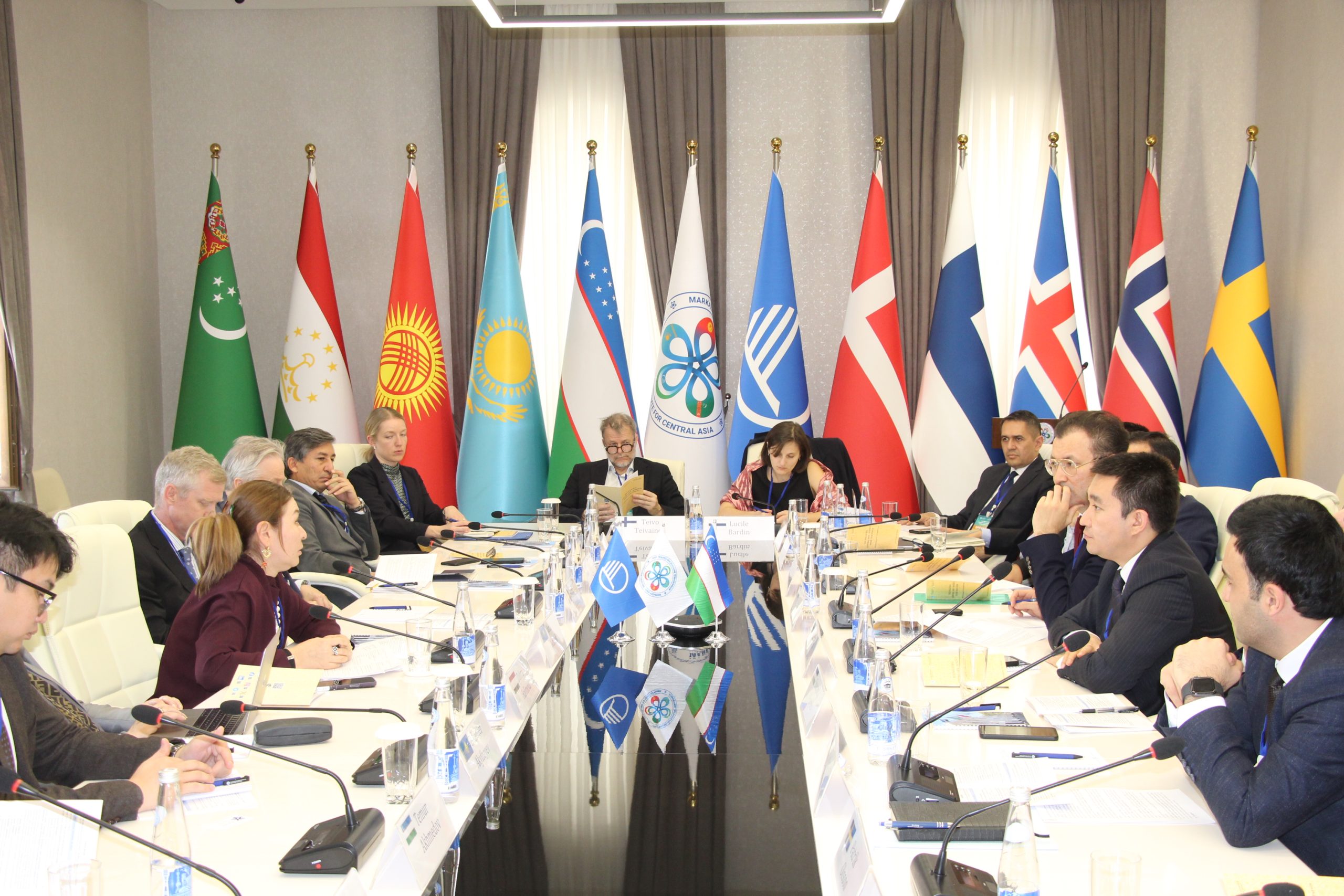
The establishment of the Central Asia–Nordic Council Think Tank Forum represents a timely and strategic step toward unlocking the potential of relations between these two regions. By bringing together leading experts and researchers from both regions, the Forum fosters knowledge exchange, policy innovation, and joint action on shared priorities such as sustainability, education, digital transformation, connectivity, and inclusive governance. Over time, this platform can serve as the intellectual engine for deeper, more systematic engagement, including future high-level summits and ministerial dialogues.
Through practical cooperation and the sharing of best practices, Central Asia and the Nordic countries can build a robust partnership—moving beyond dialogue to real solutions for sustainable development, resilient institutions, and shared prosperity.
Webinar: Small States in Russia's Neighborhood
The Central Asia-Caucasus Institute at the American Foreign Policy Council (AFPC) is excited to invite you to register for our upcoming webinar “Small States in Russia’s Neighborhood."
Register here!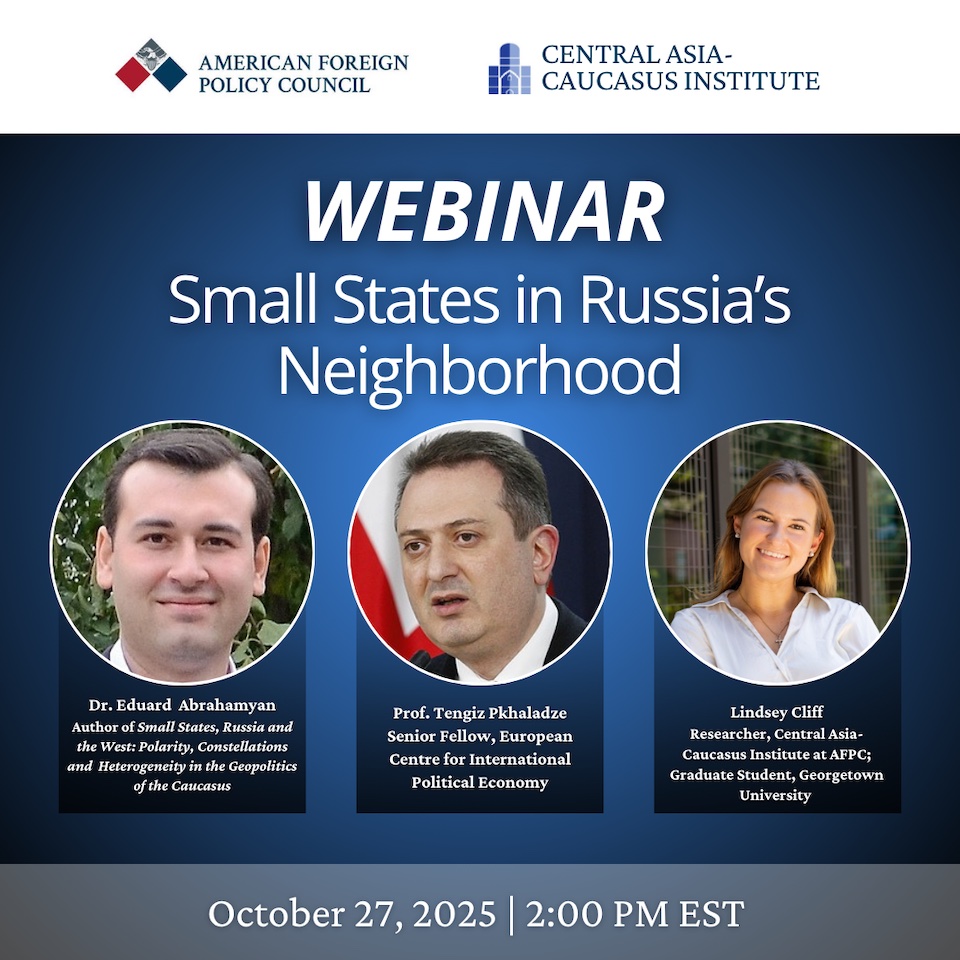
The webinar will cover Dr. Eduard Abrahamyan’s new book Small States, Russia and the West: Polarity, Constellations and Heterogeneity in the Geopolitics of the Caucasus. The book explores how small states in the Caucasus navigate intense great-power competition, particularly amid Russia’s resurgence as a regional power. Abrahamyan argues that these nations’ foreign policies reflect not only Russian or Western influence, but also their unique cultures, domestic power dynamics, and worldviews. Using an expanded Constellation Theory, he provides a fresh framework for understanding how non-Western regional orders form in today’s increasingly multipolar world.
Feature Speakers:
Dr. Eduard Abrahamyan is a Senior Research Fellow at the Yerevan-based Institute for Security Analysis and a Teaching Fellow in International Relations at University College London. He served as an aide to the President of the Republic of Armenia on foreign affairs from 2019 to 2021 and was a Rumsfeld Fellow in 2017.
He will be in conversation with Prof. Tengiz Pkhaladze, Professor at the Georgian Institute of Public Affairs and a Senior Fellow at the European Centre for International Political Economy. Previously, he was an Advisor and Foreign Relations Secretary to the President of Georgia. Dr. Pkhaladze previously served as Chairman of the International Centre for Geopolitical Studies (2008–2014).
Both Dr. Abrahamyan and Dr. Pkhaladze are former CAMCA (Rumsfeld) Fellows.
The discussion will be introduced by Lindsey Cliff, a Researcher at AFPC’s Central Asia-Caucasus Institute and a graduate student in Georgetown’s Center for Eurasian, Russian, and East European Studies.
Register here!
Purchase the book here!
Webinar Recap for A New Central Asia: From Past Attempts to Future Cooperation
The Central Asia Caucasus Institute recently convened a timely forum on the future of regional cooperation in Central Asia. The discussion featured Dr. Sanat Kushkumbayev, Ambassador Javlon Vakhabov, and Professor S. Frederick Starr, moderated by Dr. Svante Cornell. The session built on new CACI publications and looked ahead to the upcoming Central Asia Summit in Tashkent, with an emphasis on lessons from the past, the progress of recent years, and the path forward for integration.
Both Dr. Kushkumbayev and Amd. Vakhabov have recently published within CACI. To read Dr. Kushkumbayev’s work on the failed Central Asian Union of 1990-2005, click here. To read Amd. Vakhabov’s work on opportunities and challenges for Central Asia, please click here.
Watch the full discussion below or on YouTube.
Lessons from Earlier Attempts
Dr. Kushkumbayev highlighted the limitations of past integration projects in the 1990s and early 2000s. Efforts such as the Central Asian Union were hampered by divergent economic models, lack of political will, unresolved border disputes, and external pressures. Many initiatives remained confined to declarations without implementation. He emphasized that while early attempts faltered, they provide critical lessons for today, including the importance of practical outcomes over symbolism and the risks of rivalry between national leaders.
A Pragmatic Turn in Regionalism
According to Dr. Kushkumbayev, Central Asia is now entering what some call “integration 2.0.” Unlike earlier experiments, the new phase is rooted in pragmatism rather than ideology. Cooperation is being pursued through flexible consultative meetings and concrete projects in trade, transport, and energy. This shift marks a more cautious but sustainable approach, focused on building trust and delivering tangible benefits for citizens rather than constructing supranational bodies.
Progress and New Institutions
Ambassador Vakhabov underscored how recent years have brought real breakthroughs, including the settlement of sensitive border issues and advances in water and energy cooperation. Initiatives like the Treaty of Friendship and the adoption of a long-term regional cooperation concept signal deeper institutionalization. Under Uzbekistan’s chairmanship, priorities include connectivity, tourism development, energy collaboration, and people-to-people ties. While challenges remain—such as water scarcity, uneven infrastructure, and differing external alignments—the region is moving from problem-solving to collective action.
Reactions and Next Steps
Professor Starr praised the shift from coordination to consolidation, calling it a “dramatic change” after three decades of independence. He urged Central Asia to strengthen its institutions further, warning that without them the region risks “driving with the handbrake on.” He also raised strategic questions about expanding the group to a C6 by formally including Azerbaijan and about leading careful engagement with Afghanistan. Dr. Cornell added that while ad hoc cooperation has been effective so far, lasting progress will require stronger institutions that can shield regional initiatives from domestic politics and external pressures.
Is Central Asia Stable?
The Central Asia - Caucasus Institute at the American Foreign Policy Council (AFPC) recently hosted a webinar titled "Is Central Asia Stable?" The discussion explored regional stability in Central Asia.
The panel featured Dr. Svante Cornell, Director of AFPC's Central Asia-Caucasus Institute; Dr. Nargis Kassenova, Director of the Program on Central Asia at the Davis Center; and Dr. Jacob Zenn, Adjunct Associate Professor at the Center for Security Studies at Georgetown University. The panel was moderated by Ms. Laura Linderman, Director of Programs, Central Asia-Caucasus Institute, AFPC.
Watch the full discussion below or on YouTube.
2022 Unrest
As Dr. Cornell explained, the episodes of violence in Central Asia during 2022 served as a reminder that the region remained vulnerable to internal and external forces that could have devastating effects. As detailed in his paper, these incidents included the January riots in Kazakhstan that spread from the west to Almaty; Tajikistan's May crackdown in Khorog, the capital of the Gorno-Badakshan autonomous region; July protests in Uzbekistan's Karakalpakstan region; and the September flare-up of border conflict between Kyrgyzstan and Tajikistan.
Similar levels of violence had not been seen in Central Asia since 2022, raising the question of whether these instances were isolated remnants of COVID-induced unrest or indicators of larger regional instability. Despite these examples, Dr. Cornell noted that other forms of violence had not been apparent in Central Asia, such as large interstate conflicts, foreign-sponsored separatism, military coups, and Islamic militancy.
External Influences
Dr. Cornell discussed the negative effects of Russia's malign influence in fomenting instability in Central Asia. Dr. Kassenova contrasted this with China's role as a stabilizing force in the region, noting that China acted more predictably and with a longer strategic horizon than Russia. Due to its geographic position, China had a self-interest in promoting security cooperation, as Central Asia bordered Xinjiang, and in fostering regional connectivity to facilitate trade. Following Russia's invasion of Ukraine, China's endorsement of regional sovereignty became even more important. At the same time, anti-China sentiment among Central Asian populations limited China's reach in regional politics. Dr. Kassenova also noted that Central Asia found itself caught between U.S.-China rivalry, attempting to benefit from partnerships with both states while maintaining non-aligned status. Dr. Zenn asserted that the greatest threats from armed groups stemmed from ISIS Khorasan and Syria, although these threats remained moderate.
Economic and Institutional Vulnerabilities
Dr. Cornell highlighted institutional factors that created regional instability, including how security forces had contributed to episodes of violence. He also discussed the persistent nature of Soviet-era institutions, which created obstacles for reform attempts. These reforms—most notably in Kazakhstan and Uzbekistan—sought to make state institutions more effective and accountable to the population, offering genuine hope for improvement. Dr. Kassenova highlighted a gap between reform visions and successful implementation, while noting regional cooperation between Tashkent and Astana and expressing hope for further institutionalization and identity-building to solidify regional stability.
Based on the AFPC webinar featuring Laura Linderman, Director of Programs at Central Asia-Caucasus Institute, AFPC; Nargis Kassenova, Director of the Program on Central Asia at the Davis Center, Harvard University; Jacob Zenn, Adjunct associate professor at the Center for Security Studies at Georgetown University; and Svante Cornell, Director of Research and Publications at AFPC's Central Asia-Caucasus Institute.
Webinar: Economic Outlook for Central Asia and the Caucasus
The American Foreign Policy Council's Central Asia-Caucasus Institute recently hosted a webinar on the region's economic outlook. Dr. Subir Lall from the IMF's Middle East and Central Asia Department and Dr. Mamuka Tsereteli from AFPC discussed economic forecasts for this resource-rich region, home to some of the world's fastest-growing economies. The webinar examined whether Central Asia and the Caucasus can sustain their recent robust growth and what steps countries can take to maintain it.
Watch the full discussion below or on YouTube.
Current Economic Situation
In 2024, Central Asia and the Caucasus experienced stronger levels of growth than predicted. However, inflation remains above central bank targets in several countries, highlighting persistent price pressures. Inflation is most pronounced in Kazakhstan, where levels are expected to remain significantly higher than forecasted this year, and is most constrained among the region’s oil importers. Inflation levels are projected to gradually decline across the region.
Global Trade Tensions and External Spillovers
Dr. Lall described how global shifts, including U.S. tariffs, can indirectly affect the region. While Central Asia and the Caucasus have limited direct U.S. trade, external spillovers could include weaker demand, volatile commodity prices, and increased uncertainty in trading relationships. Effects vary by country, with Tajikistan and Uzbekistan depending on remittances, while Georgia and Armenia face higher exposure to travel and tourism impacts.
Overall, risks for the region tilt downward. Trade tensions and global political concerns reduce external demand while increasing commodity price volatility. Regional uncertainties compound these issues by reducing confidence and slowing reform momentum. However, the region could benefit from trade diversion and faster reforms.
Economic Forecast for the Future
The current growth momentum offers states a "critical opportunity" – what Dr. Lall calls the "most historic moment since the fall of the Soviet Union" – to strengthen policy frameworks and entrench market-based reforms for sustained regional growth.
As countries navigate global uncertainties, structural reforms aligned with international standards would unlock new productivity and competitiveness. Total factor productivity, once a key regional driver, has stalled recently. Private sector privatization and growth reforms are essential to reverse this slowdown. With current reforms, Dr. Lall believes the region can avoid a low-productivity trap. External reforms would boost competitiveness, while reinforcing monetary frameworks and strengthening reserves remain imperative.